
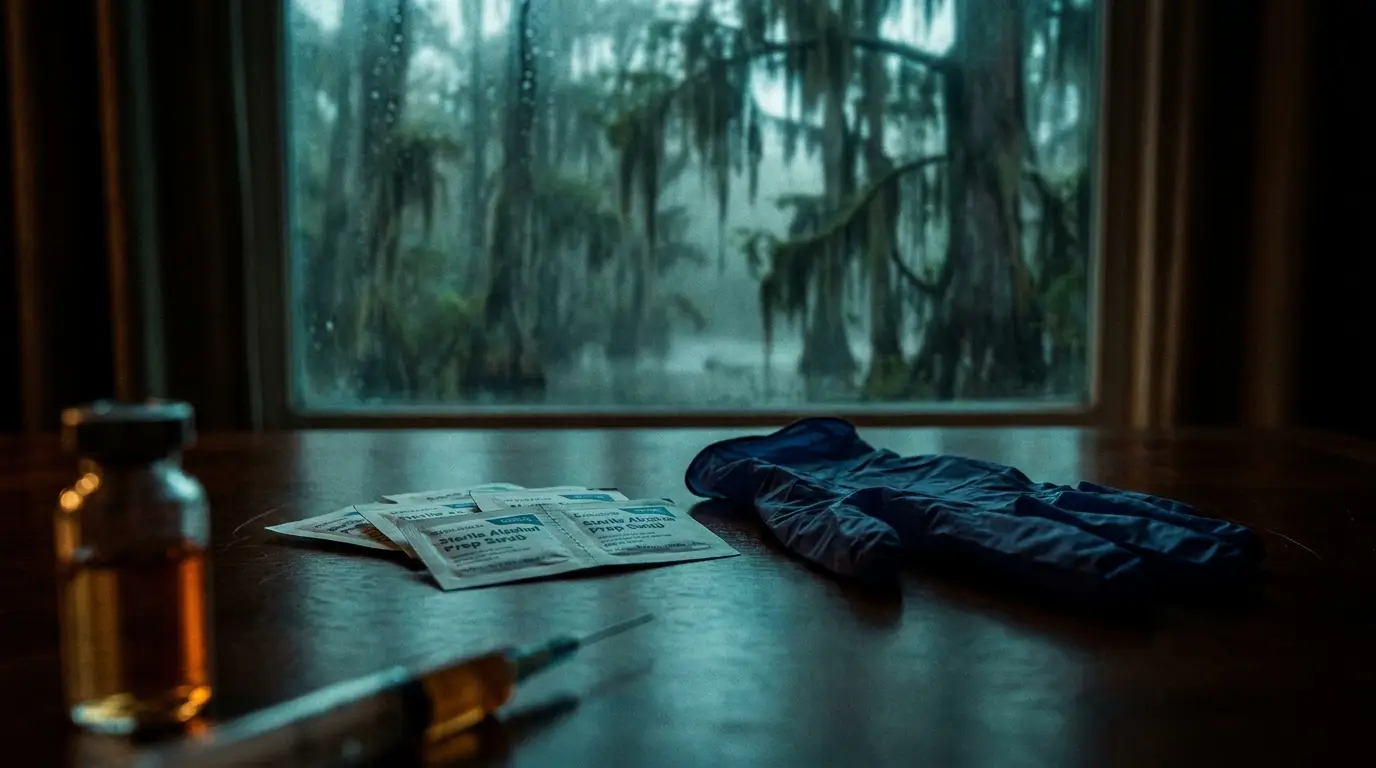
Anyone who has stepped outside on an August morning in Houston knows the feeling: the air is not just hot, it is thick. Ninety percent humidity before nine in the morning, dew clinging to the grass in the Heights, the windows of a Sugar Land kitchen fogging when the coffee maker runs. That heavy, wet air is part of what makes the Gulf Coast feel alive, and it is also part of what makes it a demanding place to think carefully about sterile technique. Microbes love warmth and moisture. Sterile procedures are, at their core, a fight against exactly those conditions. This article looks at what injection hygiene actually requires, why the Houston climate stacks the deck in specific ways, and how to think about it honestly, all framed for education and research discussion rather than as instructions to use any compound.
Before going a single sentence further, the framing has to be honest, because it shapes everything that follows. The overwhelming majority of research peptides discussed in community and telehealth contexts are not approved by the U.S. Food and Drug Administration for human use. A small group is approved, but only for narrow, specific indications: semaglutide and tirzepatide for type 2 diabetes and chronic weight management, liraglutide for similar uses, tesamorelin for HIV-associated lipodystrophy, and PT-141 (bremelanotide) for a specific form of low sexual desire in women. Everything else, including widely discussed names like BPC-157 and the growth hormone secretagogues, sits in a research-only category with no FDA sign-off for treating any condition in people. Nothing here is a recommendation to obtain or use these substances, and this site does not sell them. What this article can do is explain the science of contamination and infection, because that science is real regardless of what is in any given vial.
Why Humidity Is Not Your Friend at the Injection Site
There is a common and understandable intuition that moist air is somehow cleaner than dry air, perhaps because humidity feels soft and dust feels dry. The microbiology says the opposite. Most bacteria and fungi that cause skin and soft-tissue infections thrive in warm, moist environments, which is precisely why the folds of the body that stay damp, and the corners of a bathroom that never fully dry, are where problems concentrate. The Gulf Coast delivers warmth and moisture for most of the year, and that combination is a growth medium, not a disinfectant. Elevated humidity keeps surfaces damp longer, slows the drying of skin and equipment, and gives environmental molds a foothold on anything left sitting out. None of that sterilizes a thing.
The human skin is home to an enormous population of bacteria at all times, and that is normal and mostly harmless on an intact surface. The trouble begins when a needle carries organisms from the skin, from an unwiped stopper, or from the air into the tissue beneath, where the immune system's outer defenses have been bypassed. Staphylococcus species, including the ordinary skin dwellers and the more dangerous resistant strains, are the usual culprits in injection-related infections. A warm, humid climate does not create these organisms out of nothing, but it does support larger surface populations and slower drying, which is why the same careless habit that might get away with it in dry Denver can turn into an abscess on the bayou. The environment raises the cost of every shortcut.
Humidity Amplifies Contamination, It Does Not Reduce It
What Aseptic Technique Actually Means
Aseptic technique is the set of practices designed to prevent microorganisms from reaching a place they should not be. In a hospital around the Texas Medical Center, it is an elaborate, audited discipline involving sterile fields, gowns, and rigorous hand hygiene. Outside that setting, the underlying principles are the same even when the scale is smaller: clean hands, a clean surface, a disinfected skin site, a disinfected vial stopper, a sterile single-use needle, and a deliberate effort to keep sterile things from touching non-sterile things. The concept that ties it all together is that sterility is not a product you buy but a condition you maintain moment to moment, and it is lost the instant a clean surface contacts a dirty one.
Hand hygiene sits at the foundation because the hands are the primary vehicle by which organisms travel from one surface to another. Decades of infection-control research, much of it foundational to modern medicine, establish that thorough handwashing or an alcohol-based hand rub dramatically reduces the microbial load a person carries on their skin. This is not a peptide-specific finding; it is the single most reliable infection-prevention measure known, applicable to every clinical procedure. In a humid climate where hands sweat and stay damp, the discipline of cleaning and then fully drying them matters even more, because a wet surface picks up and transfers organisms more readily than a dry one.
Skin antisepsis is the next layer. Wiping the intended site with an alcohol pad and, critically, letting it air-dry rather than fanning or blotting it, allows the alcohol time to actually kill surface organisms; the drying is the working part of the process, not a delay to be skipped. The same logic applies to the vial stopper, which should be wiped and allowed to dry before every single puncture, not just the first. Rubber stoppers are not sterile on their outer surface once a vial has been handled, shipped through a humid Houston summer, and set on a counter, and a needle drawn through an unwiped stopper carries whatever is on that rubber straight into the solution.
Let Alcohol Air-Dry, Every Time
The Needle Is Not the Enemy, Reusing It Is
A brand-new, single-use needle drawn from sealed sterile packaging is one of the cleanest objects in the entire process. The risk it carries is not inherent to the needle but to what happens to it once the packaging opens. The single most consequential hygiene failure in home injection is needle reuse, and it is worth being blunt about why. A needle tip is microscopically barbed after a single pass through a stopper and skin; reusing it increases tissue trauma, and every moment a used needle spends exposed to humid room air is time for organisms to settle on it. Reuse also breaks the sterility of the fluid path if the same needle is used to draw and then inject and then draw again. The convenience is real and the risk is realer.
Community protocols circulating online sometimes normalize practices that a clinician would never endorse, such as using one needle for multiple draws across days or leaving a needle capped and set aside for later. Capping does not restore sterility; the inside of a cap is not a clean-room, and in a humid environment it is a small, dark, damp chamber. The honest reality is that a needle is inexpensive relative to the cost of an abscess, an emergency-room visit, or a bloodstream infection, and the entire economic logic of reuse collapses the moment an infection actually occurs. This is a place where the research-only status of most of these compounds compounds the danger, because there is no pharmacist or clinic reinforcing correct technique the way there would be with a genuinely prescribed medication.
Never Reuse or Share Needles, Full Stop
Staging a Clean Space in a Humid Home
Most people default to the bathroom for anything medical, and on the Gulf Coast that is often the worst possible choice. A Houston bathroom, especially after a shower, is a warm, humid box where mold spores settle on grout and towels stay damp all day. The kitchen or a cleared table in an air-conditioned room is generally a far better staging area than a steamy bathroom, precisely because it is drier and easier to wipe down to a hard, clean surface. The goal is a non-porous surface, freshly disinfected, in the least humid room available, with good light and no fan blowing dust or bathroom air across the field. In a climate this damp, choosing the right room is itself an infection-control decision.
Air conditioning does more than provide comfort in Houston; it actively lowers indoor humidity, which is why a well-cooled, dehumidified room is a meaningfully cleaner environment than an un-air-conditioned space or one with the windows open to Gulf air. Running the air conditioning, keeping the staging surface dry, and avoiding porous materials like damp cloth towels in the immediate work area all reduce the microbial load in the space. These are not exotic measures; they are the ordinary Houston habits of anyone who has fought mildew in a closet or a shower, applied deliberately to a setting where sterility matters. The city teaches its residents to respect humidity, and that instinct serves well here.
Pick the Driest, Coolest Room, Not the Bathroom
Key takeaways
- Humidity favors microbial growth; it never sterilizes, so the Gulf Coast environment raises the cost of every hygiene shortcut.
- Aseptic technique is a moment-to-moment condition: clean hands, clean surface, disinfected skin and stopper, sterile single-use needle.
- Let alcohol air-dry on both skin and stopper every time, because the drying and contact time are what actually disinfect.
- Needle reuse and any needle sharing are the highest-risk behaviors and are never acceptable.
- Stage in the driest, coolest, air-conditioned room available, not a steamy Houston bathroom, on a hard wiped-down surface.
Reading the Warning Signs of an Infection
Even with careful technique, infections can happen, and recognizing them early is part of responsible awareness. A minor injection site may be slightly tender or show a small bruise, which typically resolves on its own. An infection announces itself differently: expanding redness that spreads outward over hours, warmth to the touch, increasing rather than decreasing pain, swelling that hardens, or any drainage of pus. Systemic signs such as fever, chills, or feeling generally unwell are red flags that an infection may be spreading beyond the local site. The distinction between ordinary soreness and a developing infection is not always obvious to a layperson, which is exactly why it belongs in front of a clinician rather than a message board.
Certain patterns deserve genuine urgency. A spreading area of redness with a defined, advancing border can indicate cellulitis, a bacterial skin infection that can move quickly and sometimes requires prompt treatment. A firm, painful, fluctuant lump may be an abscess, a walled-off collection of infection that often needs to be drained by a professional and does not reliably resolve with home care. Streaking redness moving up a limb, rapidly worsening pain out of proportion to the appearance, or any systemic symptoms warrant same-day medical evaluation. Houston has no shortage of urgent-care clinics and emergency departments, and the several around the Texas Medical Center and throughout Katy, Pearland, The Woodlands, and Clear Lake exist precisely for situations that should not wait.
Spreading Redness, Fever, or Pus Is a See-a-Doctor Situation
The BPC-157 and GLP-1 Reality Check
The two peptide categories most often searched by Houston residents illustrate how differently the hygiene conversation should be weighted depending on regulatory status. BPC-157, a synthetic peptide derived from a protein found in gastric juice, is enormously popular in recovery and injury communities and is genuinely a research chemical: it is not FDA-approved for human use, its human safety data is thin, and most of what is claimed for it rests on animal and preclinical work rather than rigorous human trials. Anyone encountering it through unregulated channels is not only navigating an uncertain compound but is also doing so without the professional oversight that reinforces correct sterile technique, which layers a hygiene risk on top of an already uncertain substance.
The GLP-1 receptor agonists occupy a different world. Semaglutide and tirzepatide have extensive human clinical trial data behind their approved uses in diabetes and weight management, and many Houston residents access them through legitimate telehealth providers and compounding pharmacies as genuinely prescribed medications. In that context, the patient receives labeled product, storage instructions, and, importantly, technique guidance and a professional to call. The hygiene principles in this article still apply to a prescribed GLP-1 injection, but they arrive supported by a real chain of care rather than improvised from a forum. Conflating the two categories, treating an unregulated research vial as if it carried the same evidentiary and safety backing as an approved medication, is one of the most common and consequential errors in this space.
This is also where the compounding-pharmacy distinction earns its weight. A compounded medication prepared for an individual patient under a valid prescription operates within state and federal oversight, and its preparation, labeling, and storage guidance are the responsibility of licensed professionals. That is a fundamentally different thing from a research vial of uncertain origin and content. When the hygiene of an injection is being maintained by a person following pharmacy instructions for a prescribed product, the whole risk profile shifts, which is a large part of why every honest version of this discussion ends by pointing back toward physician-directed, pharmacy-supported care rather than solo experimentation on the bayou.
On the Gulf Coast the air itself is working against sterility, so the discipline has to be deliberate; humidity forgives nothing that technique leaves undone.
Sharps, Disposal, and the Neighborly Details
Hygiene does not end when an injection does. Used needles are biohazards, and how they are disposed of matters both for safety and for the people who handle household waste. The standard practice, endorsed by public-health guidance, is to place used sharps immediately into a puncture-resistant sharps container rather than a household trash bag, and to never recap, bend, or clip a needle before disposal. Loose needles in a garbage bag are a real hazard to sanitation workers, and in a region as populous as greater Houston that is a live concern, not an abstraction. Many pharmacies and some municipal programs across Harris County and the surrounding areas provide sharps-disposal options, and a legitimate care provider can point a patient toward them.
There is a humidity angle even here. A sharps container should be kept closed and stored somewhere dry, because a damp environment invites the same microbial growth on any residual biological material that plagues everything else on the Gulf Coast. Keeping the container out of a humid bathroom and away from children and pets is basic, and it fits the overall theme: the environment is warm and wet enough that carelessness compounds. None of these disposal details are exotic, but they are the kind of thing that gets neglected when technique is being improvised rather than taught, and they are one more argument for engaging with this subject through a professional framework.
- Clean and fully dry hands before touching any equipment, using soap and water or an alcohol-based hand rub.
- Stage on a hard, non-porous, freshly wiped surface in the driest, coolest, air-conditioned room available.
- Wipe the vial stopper with alcohol before every puncture and let it air-dry.
- Disinfect the skin site with alcohol and allow it to air-dry completely before proceeding.
- Use a sterile, single-use needle once and only once, for one person only.
- Place the used needle straight into a puncture-resistant sharps container without recapping or bending it.
Evidence Grading: What We Actually Know
It is worth being explicit about the quality of evidence behind the claims here, because evidence grading is central to how HTX Peptide approaches every topic. The infection-control fundamentals, that hand hygiene, skin antisepsis, and aseptic technique reduce infection risk, and that needle reuse and sharing raise it, are among the best-established findings in all of medicine, backed by decades of clinical research and universal professional consensus. That warm, humid environments favor microbial growth is likewise settled microbiology. These are high-confidence, well-supported facts, and the Houston-specific framing simply applies them to a climate that makes the stakes tangible.
The regulatory and safety statements are similarly firm: the FDA-approval status of the various compounds is a matter of public record, and the strong human trial base for the approved GLP-1 medications contrasts sharply with the thin human evidence for research-only peptides like BPC-157. Where the honesty is most important is in resisting the temptation to let popularity substitute for evidence. A compound being widely discussed in Houston recovery circles or fitness communities says nothing about whether it is approved, whether it is safe over the long term, or whether the claims made for it survive rigorous human study. For the large research-only category, the correct posture is caution and professional consultation, not confidence borrowed from an internet consensus.
Finally, none of this should be read as a green light. This article deliberately contains no dosing figures presented as instruction and no sourcing or purchasing guidance of any kind, because those are not decisions an article can responsibly hand to a reader. Even the hygiene principles, sound as they are, are context for understanding risk rather than a permission slip to improvise injections at home. The gap between reading about sterile technique and safely administering any injection is filled by a licensed physician who knows an individual's history and can weigh the real and substantial unknowns, and that is a gap no blog can or should try to close. This piece is for adults 18 and older, is educational only, and points every real decision toward a qualified professional.
The Gulf Coast is a wonderful, humid, alive place to live, and its climate is a genuine variable in any conversation about sterility. Warmth and moisture favor the very organisms that sterile technique exists to exclude, which means the discipline required here is, if anything, greater than in a drier city. Understand the microbiology, respect what the humidity is doing, keep the FDA-approval distinctions straight, never reuse or share a needle, recognize the warning signs of infection early, and let a licensed physician and a legitimate pharmacy carry the parts of this that matter most. That is the whole of responsible, educational engagement with injection hygiene on the bayou.
Frequently asked
Does Houston's humidity actually make injection-site infections more likely?+
Humidity itself does not inject anything into anyone, but the warm, moist Gulf Coast environment favors the growth of the skin and environmental bacteria and molds that cause injection-site infections, and it keeps surfaces and skin damp longer. That raises the microbial load in the environment and slows the drying that sterile technique depends on, so the same careless habit is riskier here than in a dry climate. The technique, not the weather, is what protects you, and the weather is why the technique has to be disciplined.
What is the single most important injection-hygiene habit?+
Two habits share the top: cleaning and fully drying your hands before touching anything, and using a sterile single-use needle exactly once for one person. Hand hygiene is the most reliable infection-prevention measure in all of medicine, and needle reuse or sharing is the highest-risk behavior. Beyond those, wiping and air-drying both the skin site and the vial stopper with alcohol before every use is essential, because the drying and contact time are what actually disinfect.
Why is the bathroom a bad place for this on the Gulf Coast?+
A Houston bathroom, especially after a shower, is a warm, humid box where mold settles on grout and towels stay damp, which is close to the worst environment for maintaining sterility. A cleared, non-porous surface in an air-conditioned, dehumidified room such as a kitchen table is generally far better, because it is drier and easier to wipe down to a hard clean surface. Running the air conditioning lowers indoor humidity and meaningfully reduces the microbial load in the space.
Is it ever acceptable to reuse a needle if I wipe it down?+
No. Wiping or recapping does not restore a needle's sterility, and a used needle is microscopically damaged after a single pass, which increases tissue trauma. Reuse also raises infection risk, and sharing a needle between people can transmit hepatitis B, hepatitis C, and HIV. Single-use, one-person, one-time is the only defensible standard, and needles are inexpensive relative to the cost of an infection.
How do I tell ordinary soreness from an infection?+
Minor tenderness or a small bruise that resolves on its own is common. An infection tends to show expanding redness that spreads over hours, warmth, increasing rather than decreasing pain, hardening swelling, or drainage of pus. Fever, chills, or feeling generally unwell suggest the infection may be spreading. Red streaking up a limb or rapidly worsening pain is urgent. The distinction is not always obvious to a layperson, which is exactly why it belongs in front of a clinician.
What should I do if I think an injection site is infected?+
Seek prompt medical evaluation rather than waiting or guessing online. Spreading redness with a defined border can indicate cellulitis, and a firm, painful, fluctuant lump can be an abscess that often needs professional drainage. Systemic symptoms like fever warrant same-day care. Houston has ample urgent-care clinics and emergency departments, including many around the Texas Medical Center and throughout Katy, Pearland, The Woodlands, and Clear Lake, for exactly these situations.
Is BPC-157 FDA-approved, and does that change the hygiene picture?+
BPC-157 is not FDA-approved for human use; it is a research chemical whose human safety data is thin and whose claims rest largely on animal and preclinical work. Because it is typically encountered through unregulated channels, anyone using it lacks the professional oversight that reinforces correct sterile technique, which layers a hygiene risk on top of an already uncertain compound. That contrasts with prescribed GLP-1 medications, which arrive with labeling, storage instructions, and a provider to call.
How should used needles be disposed of in the Houston area?+
Place used sharps immediately into a puncture-resistant sharps container, never in a household trash bag, and never recap, bend, or clip a needle first. Loose needles are a real hazard to sanitation workers across greater Houston. Keep the container closed, stored somewhere dry and away from children and pets. Many pharmacies and some programs across Harris County and surrounding areas offer sharps-disposal options, and a legitimate provider can point you to them.
Is any of this medical advice I can act on?+
No. This article is educational and for adults 18 and older only. It is not medical advice, not a prescription, and not sourcing guidance, and this site does not sell peptides. The infection-control principles are context for understanding risk, not permission to improvise injections at home. Any real decision about technique, treatment, or a specific compound belongs with a licensed physician who knows your individual situation.
References
- CDC — Guideline for Hand Hygiene in Health-Care SettingsMMWR Recomm Rep 2002;51(RR-16)
- Frid AH et al. — New Insulin Delivery Recommendations (injection technique and lipohypertrophy)Mayo Clin Proc 2016;91:1231-1255
- U.S. FDA — Safely Using Sharps (Needles and Syringes) at Home, at Work and on TravelU.S. Food and Drug Administration
- Stevens DL et al. — IDSA Practice Guidelines for Skin and Soft Tissue InfectionsClin Infect Dis 2014;59:e10-e52
- U.S. Pharmacopeia — Compounding Standards (USP General Chapters <795>/<797>)United States Pharmacopeia