
Most people build their first peptide protocol backwards. They start with a compound they saw mentioned in a podcast or a forum thread, then reverse-engineer a reason to take it. By the time they think about goals, budget, or bloodwork, they have already ordered vials and are improvising the rest. This guide flips that order. The peptide is the last decision you make, not the first, and for a Houston audience navigating Texas telehealth, Gulf-Coast heat, and a dense but confusing local clinic landscape, getting the order right matters more than any single molecule. This article is educational and for research purposes only. It is not medical advice, it does not sell or source peptides, and it assumes you are 18 or older and working with a licensed physician.
Start With One Honest Goal, Not a Wish List
A protocol is only as coherent as the goal behind it. The single most common beginner mistake is stacking four or five peptides at once, each chasing a different vague outcome: better sleep, faster recovery, leaner body composition, sharper focus, younger-looking skin. When everything is improving a little and nothing is your priority, you cannot tell what is working, what is doing nothing, and what might be causing a side effect. You have spent money and taken on risk to generate noise.
Instead, write down one goal in a form you could actually measure. Not "recover faster" but "return to full training volume after a shoulder strain within eight weeks." Not "feel better" but "improve deep-sleep minutes as measured by my wearable over a 60-day window." Not "lose weight" but "a physician-supervised reduction in waist circumference and fasting glucose over a defined period." A measurable goal does three things at once: it tells you which category of compound is even relevant, it defines the bloodwork and metrics you will track, and it gives you an honest endpoint at which you can say the protocol worked or did not.
Goals also determine how much scrutiny the evidence deserves. If your objective is fat loss and metabolic health, the FDA-approved GLP-1 and GIP medications (semaglutide, tirzepatide, liraglutide) sit on a mountain of large randomized human trials, and that is a very different evidentiary footing than a research peptide whose support comes largely from rodent studies. Matching the strength of the evidence to the seriousness of your goal is itself part of building the protocol.
Approval status is not a formality
Grade the Evidence Before You Grade the Marketing
Peptide marketing runs far ahead of peptide science. A claim can be technically true and still deeply misleading if the underlying data comes from a petri dish or a handful of rats. Before committing to any compound, sort what you read into three honest buckets: human clinical trial data, animal or in-vitro preclinical data, and anecdote. Each bucket carries a different weight, and conflating them is how beginners talk themselves into protocols the evidence does not support.
Take BPC-157, one of the most discussed recovery peptides. The enthusiasm is real, but so is the limitation: the tendon, ligament, and gut-healing findings that made it famous come overwhelmingly from rodent models. Human trial data is scarce. That does not make it worthless as a research topic, but it means an honest beginner treats the healing claims as promising preclinical signals, not established human outcomes. Ipamorelin and CJC-1295 (typically the no-DAC form) are growth-hormone secretagogues studied more for their pharmacology than for long-term real-world outcomes in healthy adults, and the durable safety and benefit questions in that population remain genuinely open.
Contrast that with the GLP-1 class, where you can point to New England Journal of Medicine and Lancet trials enrolling thousands of participants with hard endpoints and multi-year follow-up. When someone tells you a compound "is proven," the useful question is always: proven in whom, at what dose, for how long, and measured how? If the honest answer is "mice, once, four weeks, tumor markers," that is a lead worth watching, not a protocol worth building. None of this means preclinical work is worthless; it means you should size your confidence, your spending, and your risk tolerance to the strength of the evidence rather than to the confidence of the person selling it. A beginner who internalizes that one habit will avoid the majority of expensive mistakes made in this space.
Read the methods, not the abstract
Bloodwork Is the First Purchase, Not the Last
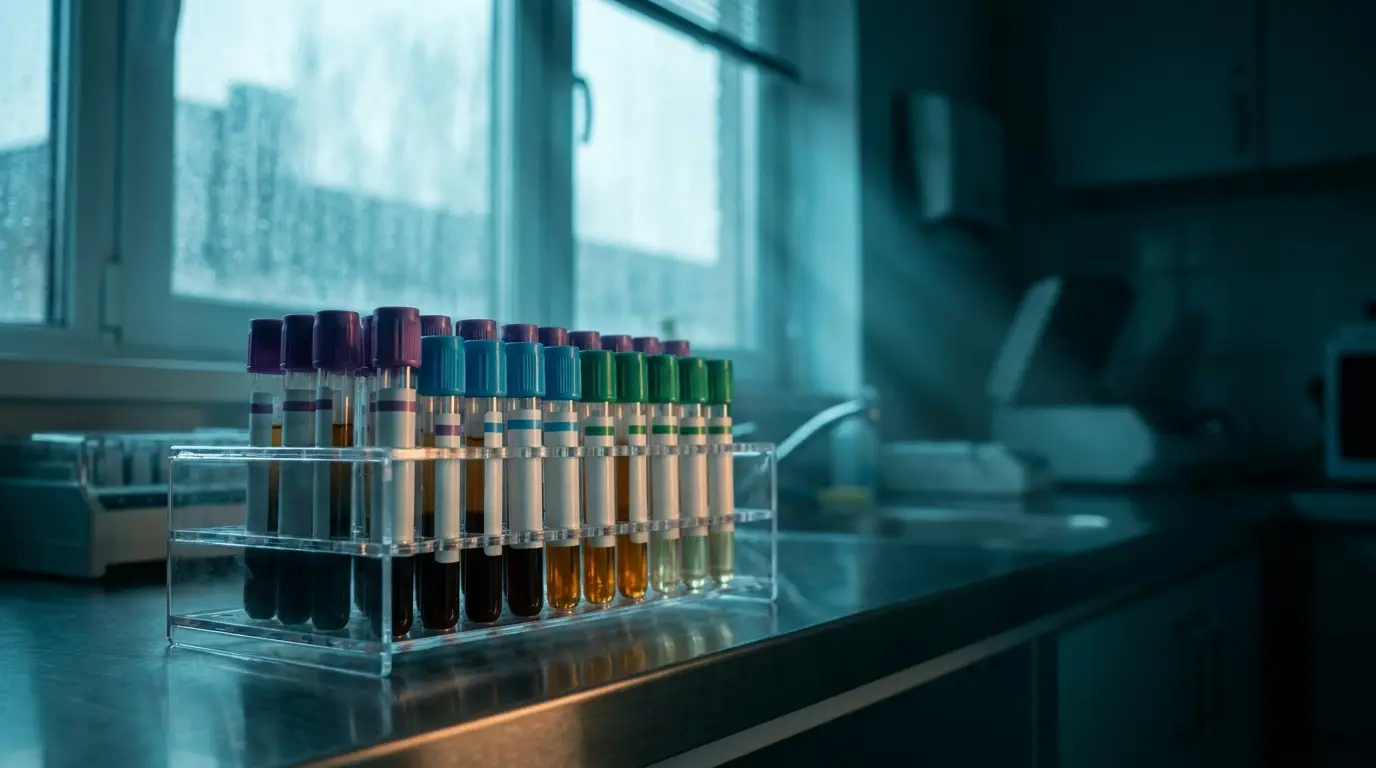
If you take one idea from this guide, make it this: baseline bloodwork comes before the first dose, every time, no exceptions. A baseline is not a bureaucratic hurdle. It is the only way you will ever know whether a protocol helped you, hurt you, or did nothing, and it is the only way to catch a developing problem while it is still small and reversible. People who skip the baseline are not saving money; they are throwing away the measurement that makes the entire experiment interpretable.
A sensible baseline panel for a general-wellness or body-composition goal usually includes a comprehensive metabolic panel (liver and kidney markers, electrolytes, fasting glucose), a complete blood count, a lipid panel, and hemoglobin A1c. For anything touching the growth-hormone axis, clinicians commonly add IGF-1, because IGF-1 is the downstream marker that actually moves when a secretagogue like ipamorelin or CJC-1295 is doing something, and it is also the marker you watch to make sure it is not climbing into a range that concerns your physician. Hormone panels, fasting insulin, and inflammatory markers get added based on your specific goal and history. The point is not to run every test that exists; it is to run the tests that map to your one goal and to the known risks of the compounds under discussion.
Houston makes the lab step easy in one respect: the Texas Medical Center is the largest medical complex in the world, and the metro is saturated with lab-draw locations from the inner Loop out through Sugar Land, Katy, The Woodlands, Pearland, and Clear Lake. Many Houston telehealth providers can order a panel that you complete at a nearby draw station, often before work given the region's brutal commutes. Under Texas practice, the ordering and interpretation belong to a licensed clinician, and that is exactly where you want that responsibility to sit.
IGF-1 exists for a reason
Key takeaways
- Baseline bloodwork is the measurement that makes your whole protocol interpretable; buy it first.
- Match your panel to your goal and to the known risks of the specific compounds, not to a generic checklist.
- For GH-axis peptides, IGF-1 is the marker that both confirms activity and guards the ceiling.
- In Houston, lab draws are easy to access, but ordering and interpretation must run through a licensed clinician.
- Re-test on a schedule; a single before-picture with no follow-up is only half a measurement.
Budget for the System, Not the Vials
Newcomers price a protocol by the cost of the peptides and get an unpleasant surprise. The compound is often the smallest line item in a properly built protocol. The real budget is a system with at least five parts, and if you cannot afford the whole system, you cannot responsibly afford the protocol.
- A supervising clinician: the telehealth or in-person consult that makes this a medical decision rather than a solo experiment, plus any follow-up visits.
- Baseline bloodwork: the panel described above, priced before you buy anything else.
- Follow-up bloodwork: at least one and usually two re-tests over the protocol window, because trend data is the entire point.
- Supplies and cold chain: syringes, alcohol swabs, sharps disposal, bacteriostatic water, and reliable refrigeration, which in a Houston summer is a real consideration.
- The compound itself: frequently the cheapest recurring line, and a poor place to cut corners on quality.
Run those numbers honestly before you start, over the full length of the protocol rather than the first month. A common failure pattern is spending everything on vials, skipping the follow-up labs to save money, and ending up with a protocol you cannot evaluate. That is the worst possible way to economize, because it converts a measurable experiment into an expensive guess. If the total system cost is out of reach right now, the correct move is to wait, not to strip out the measurement and supervision that make it safe.
Sequence your spending
The Houston Context: Heat, Humidity, and Handling
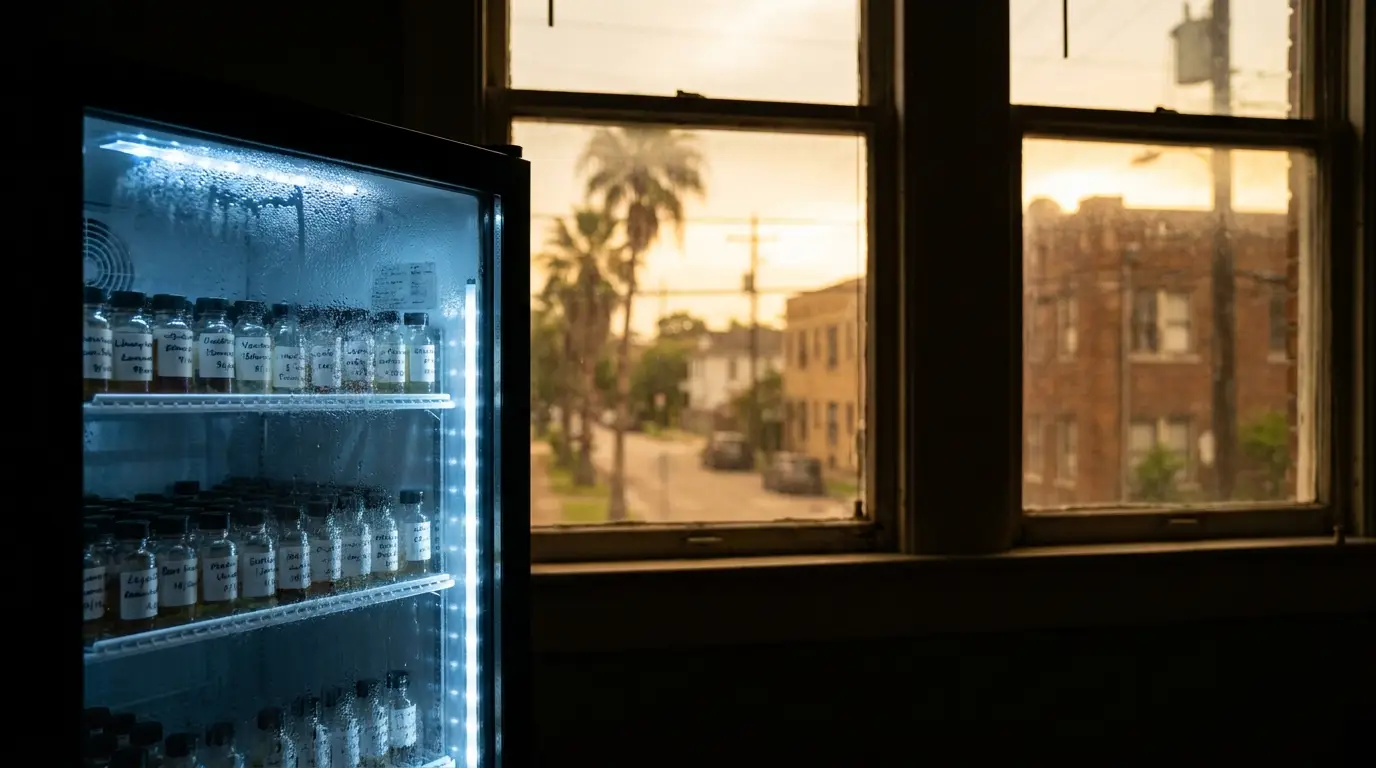
Peptides are fragile molecules, and Houston's climate is uniquely hostile to them. Reconstituted peptides generally need refrigeration, and even lyophilized (freeze-dried) powder does not appreciate heat. On the Gulf Coast, a package left on a porch in July can sit in triple-digit heat and swamp humidity for hours, and a vial left in a car during a Texas Medical Center parking session can cook quietly while you are inside. Heat and repeated temperature swings degrade peptides, and a degraded peptide is at best inactive and at worst an unknown.
The practical implications are mundane but real. Plan deliveries for days you are home to bring shipments inside quickly. Keep a dedicated, stable spot in the refrigerator rather than the door, where the temperature fluctuates every time it opens. Never leave vials in a hot car, whether you are parked at the Galleria, a Katy office park, or a Clear Lake trailhead. Travel with a small insulated cooler if you are moving product across town in summer. None of this is exotic; it is the same cold-chain discipline any temperature-sensitive medication demands, made non-negotiable by the local weather.
Degraded product is a hidden variable
How to Actually Structure a Beginner Protocol
With goal, evidence, bloodwork, budget, and storage handled, the structure of the protocol itself becomes almost boring, which is exactly what you want. The governing principles are simple and unglamorous: start with the lowest reasonable exposure, change one variable at a time, and write everything down. Any dosing figures you encounter, here or anywhere, are reference ranges reported in literature or community protocols. They are not a prescription and not an instruction. Your specific dose, frequency, and duration are a medical decision that belongs to your supervising clinician, informed by your baseline labs and history.
Start with one compound. A single-variable protocol is the only kind a beginner can actually learn from, because when something changes, good or bad, you know exactly what caused it. Adding a second peptide before you understand the first is how people build stacks they cannot interpret and cannot safely unwind. Give the single compound enough time at a stable, conservative dose to produce a trend you can see in both your tracked metrics and your follow-up bloodwork before you consider changing anything.
Keep a written log, dated, with dose, timing, injection site, how you felt, sleep, training, and any side effects. Memory is a terrible instrument for this; a two-line daily note is a good one. The log is what lets you separate a real effect from a placebo effect, a coincidence, or the normal week-to-week variation of being a human being. When you review it against your before-and-after labs, you finally have something a physician can reason about with you. And know your stopping rules in advance: decide, before you start, what side effect, lab value, or lack of progress would make you pause or stop. Deciding that ahead of time, while you are calm and objective, is far wiser than deciding in the moment when you are invested and hopeful.
A protocol you cannot measure is not a protocol; it is a hope with a syringe. Build the ruler before you build the plan.
Working With a Clinician in Texas
Texas has a well-developed telehealth environment, and for peptides that means you generally have realistic options to get a supervising clinician involved without necessarily driving into the Texas Medical Center for every step. Many Houston telehealth providers can handle an initial consult, order your baseline and follow-up labs to a nearby draw station, and stay involved as your protocol runs. Compounding pharmacies operate within a specific regulatory framework in Texas, and the FDA-approved peptide medications require a genuine prescription and a genuine prescriber relationship, not a checkbox.
The value of a clinician is not paperwork; it is judgment. A good one will push back on a goal that does not justify the risk, catch an interaction with a medication you already take, read your IGF-1 or metabolic trend in context, and tell you when to stop. If a provider is willing to hand you anything you ask for with no baseline labs, no follow-up, and no questions, that is a signal about the quality of supervision you are actually buying, not a convenience. Supervision that never says no is not supervision.
For the specific compounds many beginners ask about, the honest framing is consistent. BPC-157 is a popular recovery research peptide with encouraging preclinical data and thin human data. Ipamorelin and CJC-1295 no-DAC are growth-hormone secretagogues whose short-term pharmacology is reasonably characterized but whose long-term outcomes in healthy adults are not well established, and both warrant IGF-1 monitoring. None of these three is FDA-approved for human use. That is not a reason to dismiss them as research topics, but it is the context in which any responsible conversation with your physician should happen.
A Realistic First-Protocol Sequence
Pulling it together, a sane order of operations looks like this. First, write your single measurable goal and sit with it for a week to make sure it is real. Second, grade the evidence for the compounds that could serve that goal, honestly sorting human data from animal data from anecdote. Third, book a clinician consult and get baseline bloodwork before spending on anything else. Fourth, budget the full system across the whole protocol window, and if you cannot afford the labs and follow-up, wait. Fifth, sort out cold-chain storage for the Houston climate before your first vial arrives. Sixth, run a single compound at a conservative, physician-guided dose, log everything, and re-test on schedule. Seventh, review your metrics and labs against your baseline and decide, with your clinician, whether the protocol met its goal.
Notice that the compound does not appear until step six. That is the whole point of building a protocol correctly. The molecule is the easy part; the goal, the measurement, the budget, and the supervision are the hard parts, and they are the parts that determine whether your first protocol is a controlled experiment you can learn from or an expensive shot in the dark. Houston gives you world-class medical infrastructure and a punishing climate in the same package; a disciplined beginner uses the first to manage the second. Do the boring parts well, keep the FDA-approval reality of each compound in clear view, route every real decision through a licensed clinician, and you will have done far more for your safety and your results than any peptide on its own could ever do.
Frequently asked
Do I really need bloodwork before starting, or can I get it later?+
Baseline bloodwork should come before your first dose, not later. Without a before picture, you cannot measure whether the protocol helped, and you cannot catch a developing problem early. It is the single most important purchase in the whole process and belongs first in the sequence, not as an afterthought.
Are BPC-157, ipamorelin, and CJC-1295 FDA-approved?+
No. None of the three is FDA-approved for human use; they are discussed and sold as research chemicals. Only a short list of peptide-class drugs (semaglutide, tirzepatide, liraglutide, tesamorelin, and bremelanotide) are FDA-approved, and only for specific indications under prescription.
How much does a first peptide protocol actually cost?+
Budget the whole system, not just vials: a supervising clinician, baseline labs, follow-up labs, supplies and refrigeration, and the compound. The peptide is often the smallest recurring line item. If you cannot afford the labs and supervision, you cannot responsibly afford the protocol yet.
Why does Houston's climate matter for peptides?+
Peptides are fragile and generally need refrigeration once reconstituted, and even freeze-dried powder degrades in heat. Gulf-Coast summers mean a package on a porch or a vial in a parked car can be heat-damaged in hours. Degraded product silently ruins your protocol, so cold-chain handling is part of the experiment.
Can I start with two or three peptides to save time?+
It is a poor idea for a beginner. Stacking multiple compounds at once makes it impossible to know what is working, what is doing nothing, and what might be causing a side effect. Start with a single compound, change one variable at a time, and only consider adding another once you understand the first.
Are the dosing ranges I see online safe to follow?+
Treat every dose figure as a reference range reported in literature or community protocols, never as a prescription. Your actual dose, frequency, and duration are a medical decision that belongs to a licensed clinician who has seen your baseline labs and history. Numbers on the internet are context, not instructions.
What is IGF-1 and why do clinicians track it on GH-axis peptides?+
IGF-1 is the downstream marker that rises when a growth-hormone secretagogue like ipamorelin or CJC-1295 is active. Clinicians track it both to confirm the compound is doing something and to make sure it does not climb into a range that raises concern, since IGF-1 has real effects on cell growth.
Can I do all of this through telehealth in Texas?+
Largely yes. Texas has a developed telehealth environment, and many Houston providers can run an initial consult, order baseline and follow-up labs to a nearby draw station, and supervise your protocol. FDA-approved peptide medications still require a genuine prescriber relationship, not a checkbox.
When should I stop a protocol?+
Decide your stopping rules before you start, while you are objective: a specific side effect, an out-of-range lab value, or a defined lack of progress by a set date. Then honor them. Reviewing your log and follow-up labs with your clinician is how you make that call rather than deciding in the heat of the moment.
References
- Sikiric P et al. — Stable gastric pentadecapeptide BPC 157 (review)Curr Pharm Des 2018;24:1990-2001
- Raun K et al. — Ipamorelin, the first selective growth hormone secretagogueEur J Endocrinol 1998;139:552-561
- Teichman SL et al. — Prolonged stimulation of GH and IGF-I secretion by CJC-1295J Clin Endocrinol Metab 2006;91:799-805
- U.S. FDA — Compounding and the FDA: Questions and AnswersU.S. Food and Drug Administration
- Guyatt GH et al. — GRADE: an emerging consensus on rating quality of evidenceBMJ 2008;336:924-926