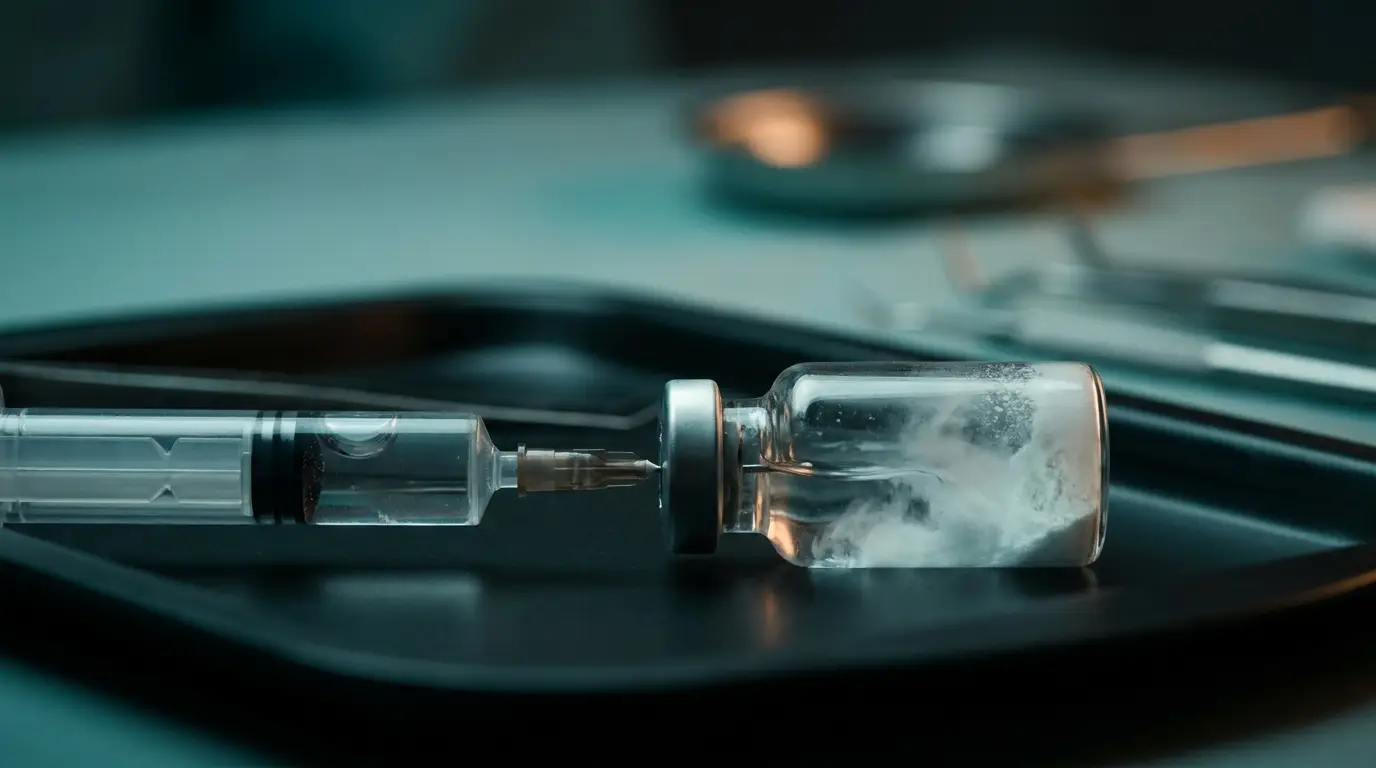
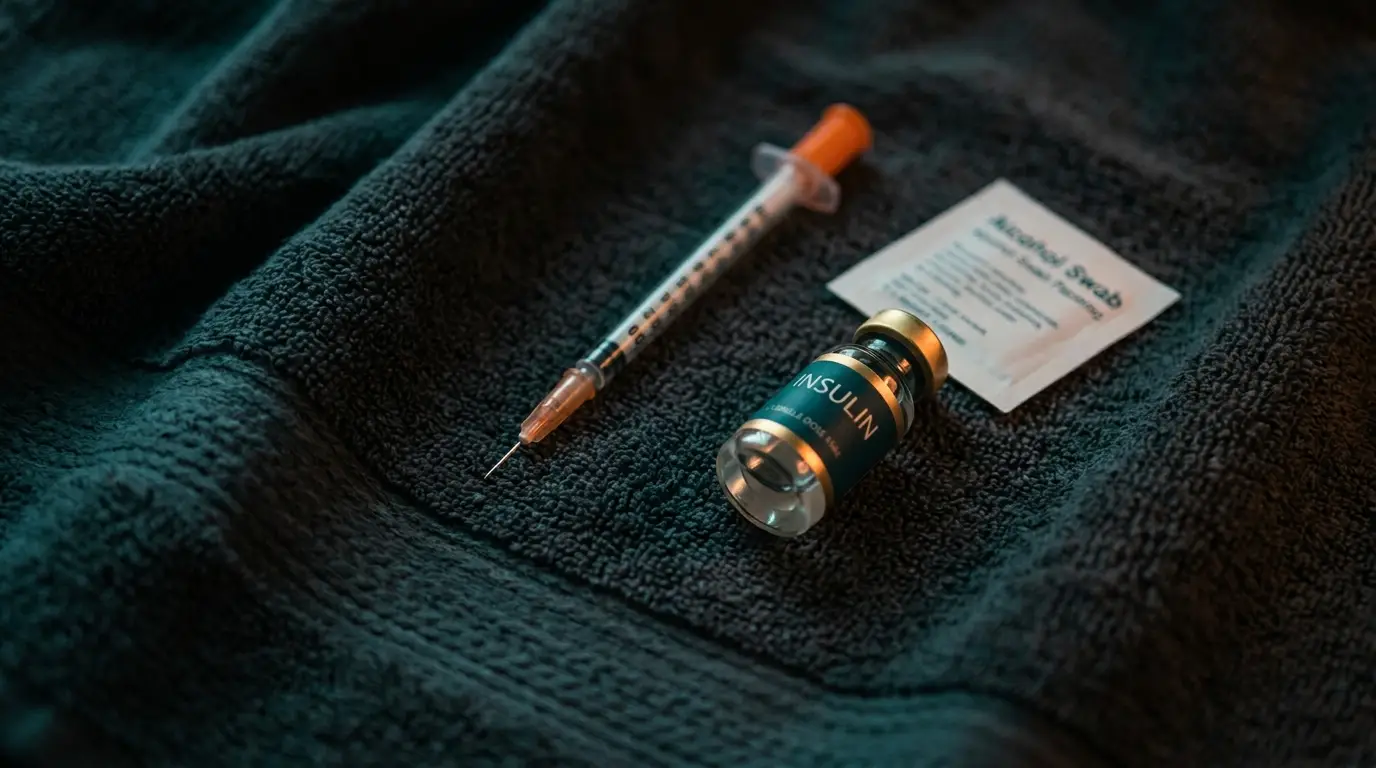
If you have never given yourself an injection, the idea can loom much larger than the reality. The needle in your imagination is longer, the moment more dramatic, the stakes higher than what actually happens when a person sets a tiny insulin-style needle against a pinch of skin and presses. Millions of people with diabetes have quietly self-injected multiple times a day for decades, and the subcutaneous technique they use is the same well-worn, unglamorous procedure that underlies most peptide self-administration. This article is a calm walkthrough of that technique for first-timers in the Houston area. It is educational, written for adults 18 and older, and it is emphatically not a prescription, a protocol to follow, or an endorsement of injecting any particular substance.
We want to be honest with you from the first paragraph, because honesty is the whole point of an evidence-graded reference. The mechanics of a subcutaneous injection are genuinely simple and genuinely safe when done cleanly. What is not simple, and what this guide cannot resolve for you, is the far more important question of whether you should be injecting anything at all. Most of the peptides discussed in the wider research-chemical community are not approved by the FDA for human use. They are sold, when they are sold at all, as research chemicals for laboratory purposes. A confident, clean injection technique does nothing to change the underlying regulatory and safety status of what is in the vial. So think of what follows as the mechanical half of a two-part decision, where the other half, the medical half, belongs entirely to a licensed physician who knows your history.
What A Subcutaneous Injection Actually Is
Your skin sits on top of a layer of fat, the subcutaneous tissue, which in turn sits on top of muscle. A subcutaneous injection, often shortened to sub-Q or SC, deposits a small volume of liquid into that fatty layer, where it is absorbed slowly into the bloodstream through the surrounding capillaries. This is different from an intramuscular injection, which goes deeper into muscle, and different again from an intravenous injection, which goes directly into a vein and is genuinely dangerous to attempt at home. The subcutaneous route is favored for self-injection precisely because the fatty layer is forgiving, the needles are short and fine, and the absorption is slow and steady rather than abrupt.
The volumes involved are usually small, often a fraction of a milliliter, and the needles are typically insulin syringes in the 29 to 31 gauge range, where a higher gauge number means a thinner needle. These needles are short, frequently between four and eight millimeters, which is part of why the subcutaneous approach is so tolerable. Decades of insulin research have established that even very short needles reliably reach the subcutaneous layer in most adults, which is why the fear of doing it wrong is usually much larger than the actual margin for error. That established base of evidence is real and reassuring. What it does not do is validate any specific compound you might be considering putting into that syringe.
Where On The Body People Inject
The classic subcutaneous sites are areas with a comfortable layer of fat and few large blood vessels or nerves near the surface. The abdomen is the most common, generally an inch or two away from the navel in any direction, avoiding the belly button itself. The outer thigh, the fleshy area on the side and front, is another standard site. The back of the upper arm can be used, though it is awkward to reach yourself and often easier with a helper. Some people use the upper buttock or flank. The specific choice matters less than the principle behind it: you want soft tissue you can gently pinch, and you want to move around.
Site rotation is one of the few genuinely important habits in this whole process, and it is worth understanding why. When the same spot is used repeatedly, the tissue can develop lipohypertrophy, a lumpy thickening of the fat that not only looks and feels abnormal but also changes how anything injected there is absorbed. This phenomenon is thoroughly documented in the insulin literature, where repeated injection into the same site is associated with erratic absorption and worse glucose control. Rotating systematically, so that you are not returning to the same square inch for days or weeks, keeps the tissue healthy and absorption more predictable. A simple mental map, left abdomen one day, right the next, thigh after that, is enough.
Build a rotation you cannot forget
The Unglamorous Fundamentals: Clean Hands, Clean Site, Fresh Needle
The parts of injection technique that actually prevent harm are almost boring in their simplicity. Wash your hands thoroughly with soap and warm water before you handle anything. Inspect the vial and the solution; it should be clear unless the specific product is meant to be cloudy, and it should be free of visible particles. Wipe the vial's rubber stopper with a fresh alcohol swab and let it dry. Wipe the intended injection site with a separate alcohol swab and, again, let it dry, because injecting through wet alcohol stings unnecessarily. Use a brand-new, sterile, single-use needle every single time. Needles are manufactured for one use; they dull and lose sterility immediately, and reusing them increases both pain and infection risk.
Aseptic technique, the practice of not touching the parts that need to stay clean, is the quiet hero here. Do not let the needle touch anything but the cleaned stopper and the cleaned skin. Do not touch the needle with your fingers. Do not set it down on the counter and pick it back up. Infections at injection sites are uncommon when technique is clean and dramatically more common when it is not, and the difference between the two is measured in a few seconds of care. None of this is advanced. It is the same hygiene discipline a nurse uses, distilled to its essentials, and it is entirely learnable by a nervous first-timer at a kitchen table in Katy or Pearland.
A sterile technique does not sterilize an unapproved compound
A Calm, Step-By-Step Walkthrough
Here is the moment itself, described slowly so it feels less like a leap. Once your hands are washed, your syringe is prepared to the volume your physician has directed, and your site is swabbed and dry, you gently pinch a fold of skin and fat between your thumb and forefinger. The pinch lifts the subcutaneous tissue away from the muscle beneath, which is reassuring for beginners. Holding the syringe like a pencil or a dart, you insert the needle with a quick, confident motion, usually at a ninety-degree angle for the short needles most people use, or a forty-five-degree angle if the needle is longer or the person is very lean. Speed helps; a slow, tentative push is what actually hurts.
With the needle in, you release the pinch if you like, then press the plunger steadily and smoothly to deliver the fluid. There is no need to rush the plunger; a couple of seconds is fine and can reduce stinging. When the syringe is empty, you withdraw the needle at the same angle you entered, then apply light pressure with a clean cotton ball or gauze if there is any pinprick of blood. You do not rub the site. Then, immediately and without setting the needle down anywhere, you dispose of the entire syringe in a proper sharps container. That final step is not an afterthought; it is part of the technique, and we will return to it because Texas has specific rules.
- Wash hands thoroughly with soap and warm water.
- Inspect the solution and swab the vial stopper with alcohol; let it dry.
- Draw the physician-directed volume, then clear air bubbles by tapping and gently pushing the plunger.
- Swab the chosen, rotated site with a fresh alcohol wipe; let it dry.
- Pinch a fold of skin and insert the needle with one confident motion.
- Press the plunger steadily until the syringe is empty.
- Withdraw at the same angle, apply light pressure, do not rub.
- Place the whole syringe directly into a sharps container.
Let the vial and your nerves warm up
The Houston Factor: Heat, Humidity, And Storage
Houston introduces a genuinely local complication that colder cities do not face to the same degree, and it is not a marketing angle, it is chemistry. Peptides are fragile molecules. Many require refrigeration, some require freezing before reconstitution, and most degrade faster when warm. Our Gulf Coast summers routinely push heat indices past a hundred degrees, and a vial left in a car in a Galleria parking garage in July is exposed to temperatures that can climb well above anything a delicate peptide should ever see. The humidity compounds the problem by encouraging condensation and, in poorly sealed situations, microbial growth. Cold-chain discipline, keeping temperature-sensitive material cold from storage through use, is a real concern for anyone in this region.
Practically, this means never leaving temperature-sensitive vials in a hot car, a windowsill in the afternoon sun, or a bag during a long errand run from The Woodlands down to the Texas Medical Center. It means using insulated carriers with cold packs for any transport, and it means being honest with yourself about whether a vial that spent an afternoon in the Texas heat is still sound. When shipping is involved, our summer temperatures make transit exposure a serious question, and a package that sat on a porch in Sugar Land at midday is a package worth scrutinizing. The heat does not care about your intentions; it degrades material regardless.
Heat-degraded material is a real Gulf Coast risk
Key takeaways
- The subcutaneous technique itself is simple, forgiving, and validated by decades of insulin self-injection experience.
- Clean hands, a swabbed site, a fresh single-use needle, and site rotation prevent the overwhelming majority of technique-related problems.
- Good technique never upgrades the safety of an unapproved or unverified compound; those are separate questions.
- Houston heat and humidity make cold-chain storage a practical, not theoretical, concern all summer long.
- Sharps must go in a proper container, and Texas has specific disposal expectations worth following.
Sharps Disposal, Texas Style
Used needles are regulated medical sharps, and how you dispose of them matters both legally and for the safety of anyone who handles your trash, including sanitation workers across Harris County. Loose needles tossed in household garbage can and do injure people. The correct approach is an FDA-cleared sharps container, or at minimum a heavy-duty puncture-resistant plastic container with a tight lid, filled no more than about three-quarters full and never overstuffed. Texas has its own guidance for household sharps, and many Houston-area pharmacies, clinics, and municipal programs offer drop-off or mail-back options rather than curbside disposal. The specifics change over time and by locality, so confirm the current rules with your pharmacy or the city.
The habit to build is that the syringe goes into the sharps container the instant you finish, in one motion, without recapping. Recapping a needle is a leading cause of accidental needlesticks, so the modern guidance is generally not to recap at all but to dispose immediately. Keep the container upright, out of reach of children and pets, away from the summer heat that can warp cheap plastic, and take it for proper disposal when it approaches the fill line. This is one of those small disciplines that separates a careful practice from a careless one, and it costs nothing but attention.
What The Evidence Does And Does Not Support
This is the section where an evidence-graded reference has to be most careful, because the gap between what people claim online and what the literature actually supports is enormous. Start with the technique itself, which stands on solid ground: the safety and reliability of subcutaneous self-injection is well-established from the insulin and self-administered biologics literature, including large bodies of work on needle length, injection angle, and site rotation. That evidence is human, extensive, and trustworthy. It tells you how to inject safely. It says nothing about what you should inject.
When you move to the compounds themselves, the evidence quality drops sharply and unevenly. A small group of peptide and peptide-adjacent drugs are FDA-approved for specific indications and backed by rigorous human trials: semaglutide and tirzepatide for type 2 diabetes and, in specific formulations, chronic weight management; liraglutide similarly; tesamorelin for a particular HIV-associated condition; and PT-141, known as bremelanotide, for a specific sexual-health indication. For these, large randomized controlled trials exist, and a physician can prescribe them with a real evidence base. That is a fundamentally different situation from the vast catalog of research-chemical peptides.
Take BPC-157, one of the most-discussed peptides in the recovery and healing conversation. The interest is understandable, but the evidence is almost entirely preclinical, meaning animal and in-vitro studies, predominantly in rats. There are no large, high-quality human randomized controlled trials establishing its safety or efficacy in people, and it is not FDA-approved for human use. Promising rodent data is a reason for scientists to run human trials, not a reason for an individual to self-inject. That distinction, between animal or anecdotal signal and human clinical proof, is the entire discipline of evidence grading, and it is the honest answer to most peptide questions: interesting, unproven in humans, not approved.
Master the technique if you must, but never let a clean injection substitute for an honest answer to the harder question of whether the thing in the vial has ever been proven safe in people.
Dosing, Reference Ranges, And Why We Route Everything To A Physician
You will notice this guide has given you no numbers to inject, and that is deliberate. The only dosing figures that appear in serious discussion are reference ranges observed in the published literature or circulating in community protocols, and neither of those is a prescription for you. Literature ranges come from trial populations under medical supervision with specific formulations; community protocols are anecdote, often built on unverified products and survivorship bias. Reproducing either as an instruction would be irresponsible and, frankly, unsafe, because the correct dose of anything depends on the individual, the indication, the formulation, the purity, and a clinical judgment that only a licensed prescriber can make.
Texas has a mature telehealth landscape, and there are many Houston telehealth providers and clinics around the Texas Medical Center and throughout the metro who practice legitimate medicine, including physician oversight and, where clinically appropriate, prescriptions filled by licensed compounding pharmacies. That is the legitimate path: a real evaluation, a real prescriber, a real pharmacy, and real follow-up. It is slower and less anonymous than a website, and that friction is a feature, because it inserts a trained human between you and a decision with medical consequences. If you take one practical action from this article, let it be booking a conversation with a licensed clinician rather than a search for a source.
Managing Nerves, Reactions, And When To Stop
First-time anxiety is normal and worth addressing directly. The most common experiences are minor: a brief pinch, a small bruise if you nicked a tiny vessel, a bit of redness, occasional itching at the site. These are usually harmless and resolve on their own, and good technique, rotation, and letting alcohol dry all reduce them. A small number of people feel faint the first few times through a vasovagal reflex, which is why sitting down is sensible. None of this should be frightening, and most first-timers are surprised afterward at how anticlimactic the whole thing was.
But you also need to know the signals that mean stop and seek help, because they are the reason medical oversight matters. Spreading redness, warmth, swelling, or pus at a site can indicate infection. Any sign of a serious allergic reaction, such as hives spreading beyond the site, facial or throat swelling, wheezing, or difficulty breathing, is a medical emergency, and in the Houston area that means calling 911 or getting to an emergency department, of which the Texas Medical Center has some of the best in the country. Persistent lumps, severe pain, or any systemic symptom like fever deserves prompt medical attention. Knowing these thresholds in advance turns a scary unknown into a manageable plan, and it underscores that self-injection is never truly a solo activity when done responsibly; a clinician should always be in the loop.
Know your emergency thresholds before you ever draw up
Putting It All Together
The mechanics of a subcutaneous injection are, at the end of the day, something an ordinary careful adult can learn in an afternoon and perform calmly for years. Wash your hands, swab cleanly, use a fresh needle, pinch, insert confidently, deliver steadily, rotate your sites, and dispose of your sharps properly. Respect the Houston heat by keeping temperature-sensitive material cold and out of hot cars and summer sun. Those habits are the whole of the technique, and none of them is difficult once the initial nervousness burns off.
The harder and more important work is the part technique cannot touch. Ask what is actually in the vial, whether it has ever been tested in humans, whether it is FDA-approved for anything, and whether a licensed physician who knows your history agrees it is a reasonable choice for you. For most research-chemical peptides, the honest answer is that the human evidence simply is not there yet, and a smooth injection does not change that. Keep this guide as the mechanical reference it is meant to be, keep your standards for evidence high, keep a real clinician in the loop, and let the calm you bring to the needle come from knowing you did the harder thinking first.
Frequently asked
Does a subcutaneous injection hurt?+
Usually very little. The needles used are short and thin, often 29 to 31 gauge, and most first-timers describe a brief pinch at most. Letting the alcohol dry, inserting with one confident motion rather than slowly, and letting a refrigerated vial lose its chill all reduce the sting.
What angle should I use, 45 or 90 degrees?+
It depends on needle length and body composition, which is a decision to confirm with your clinician. In general, the short needles most people use are given at 90 degrees, while a longer needle or a very lean person may call for 45 degrees to stay in the fatty layer and avoid muscle.
Why does everyone insist on rotating injection sites?+
Repeatedly using the same spot can cause lipohypertrophy, a lumpy thickening of the fat that alters absorption and is well-documented in the insulin literature. Rotating systematically across the abdomen, thighs, and other approved areas keeps tissue healthy and absorption more predictable.
Can I reuse a needle to save money?+
No. Needles are single-use, sterile items that dull and lose sterility immediately. Reusing them increases pain, tissue trauma, and infection risk. Use a fresh needle every time and dispose of it right away in a sharps container.
Are peptides like BPC-157 approved and safe to inject?+
BPC-157 is not FDA-approved for human use, and its evidence base is almost entirely animal and preclinical, with no large high-quality human trials. That is very different from FDA-approved drugs like semaglutide. Interesting rodent data is not proof of human safety, and any decision belongs with a physician.
How should I store peptides in Houston's heat?+
Follow the specific product's cold-chain requirements, typically refrigeration and sometimes freezing before reconstitution, and never leave temperature-sensitive vials in a hot car, direct sun, or a warm bag. Use insulated carriers with cold packs for transport, and treat any vial exposed to Texas summer heat as potentially compromised.
How do I dispose of used needles in the Houston area?+
Use an FDA-cleared sharps container or a heavy-duty puncture-resistant lidded container, filled no more than about three-quarters. Do not recap needles or put them loose in household trash. Many Houston-area pharmacies and municipal programs offer drop-off or mail-back options; confirm current Texas and local rules with your pharmacy.
When should I stop and seek medical help?+
Seek prompt care for spreading redness, warmth, swelling, or pus that may signal infection. Treat signs of serious allergic reaction, hives beyond the site, facial or throat swelling, wheezing, or trouble breathing, as an emergency and call 911 or go to an emergency department.
Is this article telling me it is okay to inject peptides?+
No. This is an educational, 18-and-over guide to the mechanics of subcutaneous technique only. It does not sell or source anything, does not provide dosing instructions, and does not endorse injecting any compound. Whether to inject anything, and at what dose, is a decision for a licensed physician who knows your health history.
References
- Frid AH et al. — New Insulin Delivery Recommendations (injection technique and lipohypertrophy)Mayo Clin Proc 2016;91:1231-1255
- U.S. FDA — Safely Using Sharps (Needles and Syringes) at Home, at Work and on TravelU.S. Food and Drug Administration
- CDC — Guideline for Hand Hygiene in Health-Care SettingsMMWR Recomm Rep 2002;51(RR-16)
- Stevens DL et al. — IDSA Practice Guidelines for Skin and Soft Tissue InfectionsClin Infect Dis 2014;59:e10-e52
- Sikiric P et al. — Stable gastric pentadecapeptide BPC 157 (review)Curr Pharm Des 2018;24:1990-2001