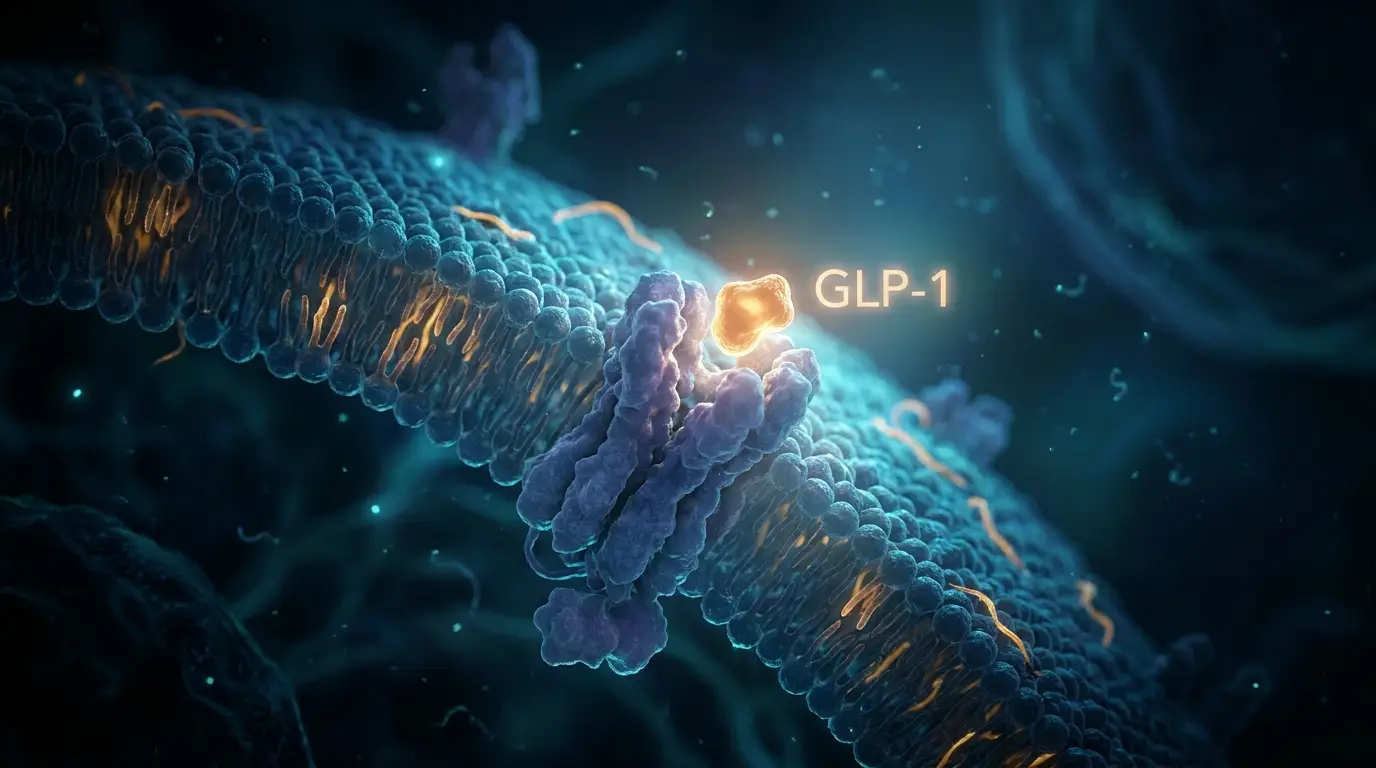

GLP-1 receptor agonists such as semaglutide (marketed as Ozempic and Wegovy) and the dual GIP/GLP-1 agonist tirzepatide (Mounjaro and Zepbound) have changed how Houston approaches weight loss. Clinics around the Texas Medical Center, telehealth providers serving Sugar Land and Katy, and compounding pharmacies across the metro have made these medications more accessible than ever. Both semaglutide and tirzepatide are FDA-approved for chronic weight management in adults who meet specific criteria, and the trial data on total weight lost is genuinely impressive. But total weight is a blunt number. What matters for how you look, feel, move and age is the composition of that loss, and this is where a lot of people on a GLP-1 quietly sabotage themselves.
The uncomfortable reality is that rapid weight loss of any kind, whether from surgery, aggressive dieting, or medication, tends to shed both fat and lean mass. Lean mass includes skeletal muscle, and skeletal muscle is not just about aesthetics or gym vanity. It is your largest reservoir of glucose disposal, a major driver of resting metabolism, and the tissue that keeps you strong, mobile and independent as you get older. Losing a lot of it while you drop pounds can leave you lighter but weaker, with a slower metabolism that makes weight regain easier once the medication is paused. This guide walks through what the evidence actually says and how to build a muscle-protecting routine that fits life in Houston.
Why GLP-1 Medications Put Muscle at Risk
GLP-1 agonists work largely by reducing appetite. They slow gastric emptying, act on hunger and satiety centers in the brain, and make it far easier to eat in a substantial calorie deficit without the gnawing hunger that usually derails a diet. That is precisely why they are effective. But the same appetite suppression that makes fat loss feel effortless also makes it dangerously easy to under-eat protein and to skip the meals that would normally supply the amino acids your muscles need to repair and rebuild. When you are barely hungry, a few bites of toast can feel like a full meal, and your daily protein can quietly collapse to a fraction of what muscle maintenance requires.
There is also a purely mechanical problem. Muscle is metabolically expensive tissue. In an energy deficit, the body will happily break down muscle for fuel unless it receives two strong signals to keep it: adequate dietary protein, and the mechanical tension of resistance exercise. Take away either signal and the body reads the muscle as surplus. On a GLP-1, appetite suppression attacks the protein signal, and the fatigue, reduced training capacity and busy-life inertia that often accompany rapid weight loss attack the exercise signal. Without a deliberate plan, both signals fade at exactly the moment you most need them.
Lean Mass Loss Is Not Automatically Benign
How Much Muscle Are We Actually Talking About?
Body-composition data from GLP-1 trials and sub-studies suggests that lean mass can account for a substantial share of total weight lost, with figures in the literature commonly cited in the range of roughly 25 to 40 percent of total loss coming from lean tissue when no specific countermeasures are used. It is important to be precise about what that means: lean mass on a DEXA scan is not all contractile muscle. It includes water, glycogen, connective tissue and organ mass, and some of the early drop is simply the water and glycogen that leave as you eat less. Still, a meaningful portion is functional skeletal muscle, and that is the part worth defending.
The honest scientific position is that the exact percentage is highly individual and the measurement tools are imperfect. What is not in dispute is the direction of the intervention: study after study in the broader weight-loss literature, including work in older adults and in people undergoing caloric restriction, shows that higher protein intake and resistance training shift the ratio of loss away from muscle and toward fat. You cannot fully eliminate lean-mass loss during a large deficit, but you can bend the curve substantially, and the tools to do it are cheap, well understood and available to anyone with a kitchen and a set of dumbbells.
It also helps to understand why this matters beyond the mirror. Skeletal muscle is where most of the sugar in your bloodstream gets stored and used, so preserving it supports the very metabolic improvements you are on a GLP-1 to achieve. Muscle underpins resting metabolic rate, meaning the more you keep, the more calories you burn at rest and the easier long-term weight maintenance becomes. And muscle is the difference between aging as someone who can carry groceries up the stairs and someone who cannot. When you frame it that way, protecting lean mass is not a bodybuilding hobby bolted onto your treatment; it is arguably the part of the plan that determines whether the weight you lose stays lost and whether you feel better or merely smaller a year from now.
Protein: The Non-Negotiable Foundation
If you change only one thing while on a GLP-1, make it protein. During an energy deficit, protein requirements go up, not down, because dietary protein has to cover both the amino acids being burned for fuel and the amino acids needed to preserve tissue. A large body of sports-nutrition and clinical research points to a practical target in the neighborhood of 1.2 to 1.6 grams of protein per kilogram of body weight per day for people losing weight who want to protect muscle, with some athletes and older adults doing better toward the higher end. For a 90-kilogram (about 198-pound) person, that is roughly 108 to 144 grams of protein daily, which is a real, deliberate effort when your appetite has been cut in half.
Distribution matters as much as the total. Muscle protein synthesis responds best to boluses of roughly 25 to 40 grams of high-quality protein containing enough leucine to trigger the building response, repeated across the day rather than crammed into one meal. On a GLP-1 where you may only feel like eating small amounts, this argues strongly for protein-first meals: eat the eggs, Greek yogurt, chicken, fish, lean beef, tofu or a protein shake before you touch the carbs or fats on the plate. When early satiety cuts the meal short, at least the muscle-protective portion is already in. Many Houstonians find that a shake or ready-to-drink protein is the only practical way to hit their numbers on low-appetite days.
Front-Load Protein Early in the Day
A word on quality and practicality: animal proteins (eggs, dairy, poultry, fish, lean red meat) and soy are complete and leucine-rich, making them efficient choices when total intake is limited. Plant-based eaters can absolutely hit their targets but usually need slightly more total protein and a wider variety of sources to cover all essential amino acids. Whey and other protein powders are convenient tools, not requirements. And do not fear splitting protein into more frequent, smaller feedings if that is what your suppressed appetite allows; four modest 30-gram servings are easier to stomach than two 60-gram plates and hit the synthesis threshold more often.
Houston's food culture can work for you or against you here, and it is worth thinking about deliberately. The city's love of barbecue, Tex-Mex and Gulf seafood actually hides a lot of high-quality protein if you order with intent. Fajita meat, brisket, grilled shrimp and fish, carne asada, and eggs at a taqueria are all protein-dense; the trouble is usually the tortillas, chips, rice and sugary drinks that surround them and crowd out the appetite you have. On a GLP-1, where every bite counts because you can only fit so many, that reframes eating out: get the protein in first, treat the starches as optional, and you can enjoy Houston's restaurants without giving up your muscle-preservation plan. Meal prepping a few protein-forward containers on Sunday also protects you from the days a suppressed appetite makes cooking feel like too much.
Key takeaways
- Aim for roughly 1.2 to 1.6 grams of protein per kilogram of body weight per day, adjusted with your physician or dietitian.
- Eat protein first at every meal so early satiety does not cost you the most important macronutrient.
- Spread protein across three to five feedings of about 25 to 40 grams rather than one large serving.
- Use shakes or ready-to-drink protein on low-appetite days and after weekly injections when hunger dips.
- Resistance train, hydrate and sleep; protein alone will not preserve muscle without a training stimulus.
Resistance Training Beats Everything Else
Protein supplies the raw materials, but resistance training supplies the reason. Lifting weights, or any progressive loading of the muscles against meaningful resistance, is the signal that tells the body the muscle is still needed and must be spared. The evidence here is about as strong as exercise science gets: in populations losing weight, adding structured resistance training reliably preserves more lean mass and strength than diet alone or diet plus cardio. Cardio has real cardiovascular and metabolic benefits and belongs in your routine, but it does not defend muscle the way lifting does, and long cardio sessions in a deep deficit can even accelerate muscle loss if protein and lifting are inadequate.
You do not need to become a bodybuilder. For most people on a GLP-1, two to four resistance sessions per week covering all the major movement patterns is plenty. The core principle is progressive overload: over weeks, you want to be lifting a little more weight, doing a few more reps, or improving control, so the muscles keep receiving a reason to stay. That said, a large calorie deficit is not the moment to chase personal records. The realistic goal on a GLP-1 is maintenance of strength and muscle, which is a win in a deficit, not aggressive muscle gain. Consistency and adequate effort matter far more than fancy programming.
- Train the major patterns: a squat or leg-press movement, a hip hinge, an upper-body push, an upper-body pull, and some direct core work.
- Aim for roughly 2 to 4 sessions per week, keeping most sets challenging but a rep or two shy of failure.
- Prioritize protein and a light carbohydrate source around your sessions to fuel effort and recovery.
- Progress gradually; on hard low-appetite or low-energy days, reduce volume rather than skipping entirely.
- If you are new to lifting, invest in a few sessions with a qualified coach to learn safe form before loading heavy.
Be prepared for training to feel different on a GLP-1. Reduced food intake means reduced glycogen and sometimes lower energy, so your work capacity, especially for high-rep or long sessions, may dip. This is normal and not a reason to quit. Keep sessions focused and relatively brief, emphasize the compound lifts that give the most stimulus for the time, and make sure at least a small amount of carbohydrate surrounds your workout so you are not lifting completely depleted. If you feel lightheaded, unusually weak, or notice your heart racing beyond normal exertion, stop and reassess your fueling and hydration, and loop in your physician if it persists.
Training in the Houston Heat and Humidity
Houston adds a variable most weight-loss content ignores: the climate. From late spring through October, the Gulf Coast delivers heat indices that routinely push past 100 degrees with humidity that makes sweat evaporate poorly, so your body struggles to cool itself. Exercising outdoors, whether that is a run along Buffalo Bayou, a boot camp in Memorial Park, or a bike ride in Clear Lake, already stresses hydration and thermoregulation. Layer a GLP-1 on top, where appetite and often thirst are blunted and you are eating less of the food and salt that normally help you retain water, and the margin for error narrows considerably.
Appetite Suppression Can Mask Dehydration
Electrolytes deserve special mention. Because you are eating less overall, you are also taking in less sodium, potassium and magnesium from food, and heavy Gulf Coast sweating pushes those losses further. Many people on a GLP-1 report fatigue, cramps and headaches that are really just under-hydration and low sodium rather than anything exotic. A pinch of salt in water, an electrolyte packet without excess sugar, or simply salting your food a bit more (assuming no blood-pressure restriction from your doctor) can make training feel dramatically better. As always, anyone with hypertension, kidney disease or heart conditions should get individualized guidance before loading up on electrolytes.
Time Gym Sessions Around Houston's Climate
Houston Gyms and Where People Train
One genuine advantage of doing this in Houston is the sheer density and variety of places to train. The metro is saturated with options across every budget and style: large national chains with locations in nearly every neighborhood, 24-hour gyms for shift workers and early risers beating the heat, boutique strength and barbell gyms for people who want coaching on the compound lifts, and personal-training studios in Memorial, the Heights, Katy and Sugar Land for those who want hands-on guidance learning to lift safely. For muscle preservation specifically, what you want is simple access to resistance equipment, whether that is a squat rack and dumbbells or a full circuit of machines, and enough consistency to show up two to four times a week.
You do not need a fancy membership to protect muscle on a GLP-1. Machine circuits at a basic chain gym are perfectly effective and are often easier and safer for beginners than free weights. Home setups work too: a pair of adjustable dumbbells and a bench in a Katy garage or a Pearland spare room removes both the commute and the summer heat as excuses. The best gym is the one close enough to your home, office or commute that you will actually use it consistently through a Houston summer. Convenience beats prestige every time when the goal is showing up for months, not weeks.
The scale measures gravity, not health. Protect the muscle, and the number on the scale finally starts telling the truth.
Where Peptides Enter the Conversation (Carefully)
Because this is a peptide-education resource, it is worth addressing the question people inevitably ask: can peptides help preserve muscle on a GLP-1? The honest answer is that the two proven, best-evidenced tools remain protein and resistance training, and no peptide substitutes for them. Some in the community pair GLP-1 therapy with growth-hormone secretagogues, a class that includes ipamorelin and related compounds, on the theory that raising endogenous growth hormone and IGF-1 might support lean mass. It is important to be clear-eyed about what is and is not established here.
Ipamorelin is a selective growth-hormone-releasing peptide that has been studied in preclinical and early-phase settings, but it is not FDA-approved for muscle preservation, weight loss, or indeed for any general human use, and there are no robust human trials demonstrating that it protects muscle during GLP-1-driven weight loss. What exists is a combination of mechanistic reasoning, animal data, and anecdotal community reports, which is a far weaker evidence base than the human trial data supporting protein and lifting. Growth-hormone secretagogues can also carry real considerations, including effects on blood sugar, water retention, and cortisol, that matter especially in people already managing metabolic health. None of this is a recommendation to use it.
Research-Only Compounds Are Not a Shortcut
For completeness, one growth-hormone-axis peptide, tesamorelin, is FDA-approved, but specifically for reducing excess visceral abdominal fat in people with HIV-associated lipodystrophy, not as a general muscle-preservation or weight-loss aid. That distinction matters: an approval for one narrow indication is not evidence of safety or efficacy for a different goal in a different population. The pattern across this whole category is the same. Where human data exist, they are usually for a specific condition; where the muscle-preservation claims live, the data are thin. That is exactly why decisions here belong with a physician and why the foundational work stays with your fork and your dumbbells.
Sleep, Recovery and the Unsexy Fundamentals
Muscle is preserved and built during recovery, not during the workout itself, and the recovery side is where many people quietly undermine their results. Sleep is the biggest lever. Chronically short sleep raises cortisol, impairs the muscle-building response to both protein and training, and worsens the appetite and cravings dysregulation that GLP-1 users are already navigating. Aiming for seven to nine hours is not a soft wellness suggestion; it is part of the physiology of holding onto muscle. Houston's late-summer heat can wreck sleep too, so a cool, dark bedroom and reasonable air conditioning are legitimate parts of a muscle-preservation plan.
Two more fundamentals round it out. First, do not lose weight faster than you have to. A more gradual rate of loss, guided by your prescriber rather than by impatience, gives protein and training more time to protect lean tissue than a crash approach does. If you are dropping weight alarmingly fast, that is a conversation to have with your clinic, not a badge of honor. Second, consider tracking more than the scale. A simple tape measure, monthly progress photos, how your lifts are trending, and, if accessible, a body-composition scan tell you whether you are losing fat or losing yourself. Strength holding steady while the scale falls is the clearest sign the plan is working.
Putting It Together: A Houston Framework
Pulling the threads together, a defensible approach for someone on a GLP-1 in Houston looks like this. Anchor every day around protein, front-loaded early and hitting a target in the range of 1.2 to 1.6 grams per kilogram, using shakes to bridge low-appetite days. Resistance train two to four times a week, indoors and air-conditioned for most of the year, prioritizing the big compound patterns and progressing gradually while accepting that maintenance, not maximal gain, is the realistic goal in a deficit. Hydrate and salt deliberately to counter the double hit of appetite suppression and Gulf Coast heat, and protect sleep as seriously as you protect protein.
Keep the medical relationship central. Semaglutide and tirzepatide are powerful, FDA-approved tools that work best inside a plan built with a physician, ideally one who monitors your body composition and not just your weight, and increasingly Houston clinics and telehealth providers are willing to do exactly that. Treat any peptide beyond your prescribed medication as a research-only topic to raise with that clinician, not a decision to make alone from a forum thread. Do the boring, proven work, defend your muscle, and you will come off a GLP-1 lighter and stronger rather than lighter and diminished. This article is educational only, is intended for adults 18 and older, and is not a substitute for personalized medical advice.
Frequently asked
Will I definitely lose muscle on semaglutide or tirzepatide?+
Some lean-mass loss during significant weight loss is expected, but how much you lose is heavily influenced by your protein intake and whether you resistance train. People who prioritize both consistently protect far more muscle than those who rely on the medication alone. Talk to your physician about monitoring body composition, not just the scale.
How much protein should I eat while on a GLP-1?+
The literature commonly points to roughly 1.2 to 1.6 grams of protein per kilogram of body weight per day during weight loss to help preserve muscle, spread across several meals. This is a general reference range, not a prescription; your ideal number depends on your body, kidney health and goals, so confirm it with a physician or registered dietitian.
What if my appetite is too suppressed to eat that much protein?+
This is one of the most common challenges on a GLP-1. Eat protein first at each meal, front-load it earlier in the day when appetite is higher, and lean on protein shakes or ready-to-drink options on low-appetite days, especially in the day or two after a weekly injection. Smaller, more frequent protein feedings are often easier to tolerate than large plates.
Is cardio or weightlifting better for keeping muscle?+
Resistance training is far more effective at preserving muscle during weight loss. Cardio has genuine cardiovascular and metabolic benefits and belongs in a balanced routine, but it does not send the muscle-preserving signal that progressive loading does. If your time is limited on a GLP-1, prioritize two to four resistance sessions per week.
Can ipamorelin or other peptides help me keep muscle on a GLP-1?+
There is no robust human trial evidence that ipamorelin or similar growth-hormone secretagogues preserve muscle during GLP-1 weight loss, and ipamorelin is not FDA-approved for human use. The claims rest largely on mechanism, animal data and anecdote. Protein and resistance training remain the proven tools. Discuss any peptide with a licensed physician before considering it.
How does Houston's heat change how I should train and hydrate?+
GLP-1 medications can blunt thirst and reduce your food-based sodium intake, while Houston's heat and humidity drive heavy fluid and electrolyte losses. That combination raises dehydration risk. Train indoors in air conditioning during the hot months or exercise early morning and evening, hydrate on a schedule rather than by thirst, and use an electrolyte source on hot, heavy-sweat days unless your doctor has restricted sodium.
How fast should I be losing weight?+
Faster is not better for muscle. A more gradual, physician-guided rate of loss gives protein and training more time to protect lean tissue. If you are losing weight alarmingly quickly, feeling weak, or noticing strength drop off, raise it with your prescribing clinic rather than pushing harder.
Do I need an expensive gym to protect muscle?+
No. A basic machine circuit at a budget chain gym, or even adjustable dumbbells and a bench at home in Katy or Pearland, is entirely sufficient. What matters is consistent access to resistance and showing up two to four times a week. The best gym is the one convenient enough that you will actually keep using it through a Houston summer.
Does HTX Peptide sell peptides or provide medical advice?+
No. HTX Peptide is an educational, evidence-graded reference only, intended for adults 18 and older. We do not sell peptides and this content is not medical advice or a prescription. Dosing and compounds mentioned reflect ranges reported in literature or community protocols and should only be acted on under the guidance of a licensed physician who knows your history.
References
- Longland TM et al. — Higher versus lower protein intake during energy deficit with trainingAm J Clin Nutr 2016;103:738-746
- Jäger R et al. — ISSN Position Stand: protein and exerciseJ Int Soc Sports Nutr 2017;14:20
- Wilding JPH et al. — Once-Weekly Semaglutide in Adults with Overweight or Obesity (STEP 1)N Engl J Med 2021;384:989-1002
- Jastreboff AM et al. — Tirzepatide Once Weekly for the Treatment of Obesity (SURMOUNT-1)N Engl J Med 2022;387:205-216
- U.S. FDA — Wegovy (semaglutide) Prescribing InformationU.S. FDA, 2021