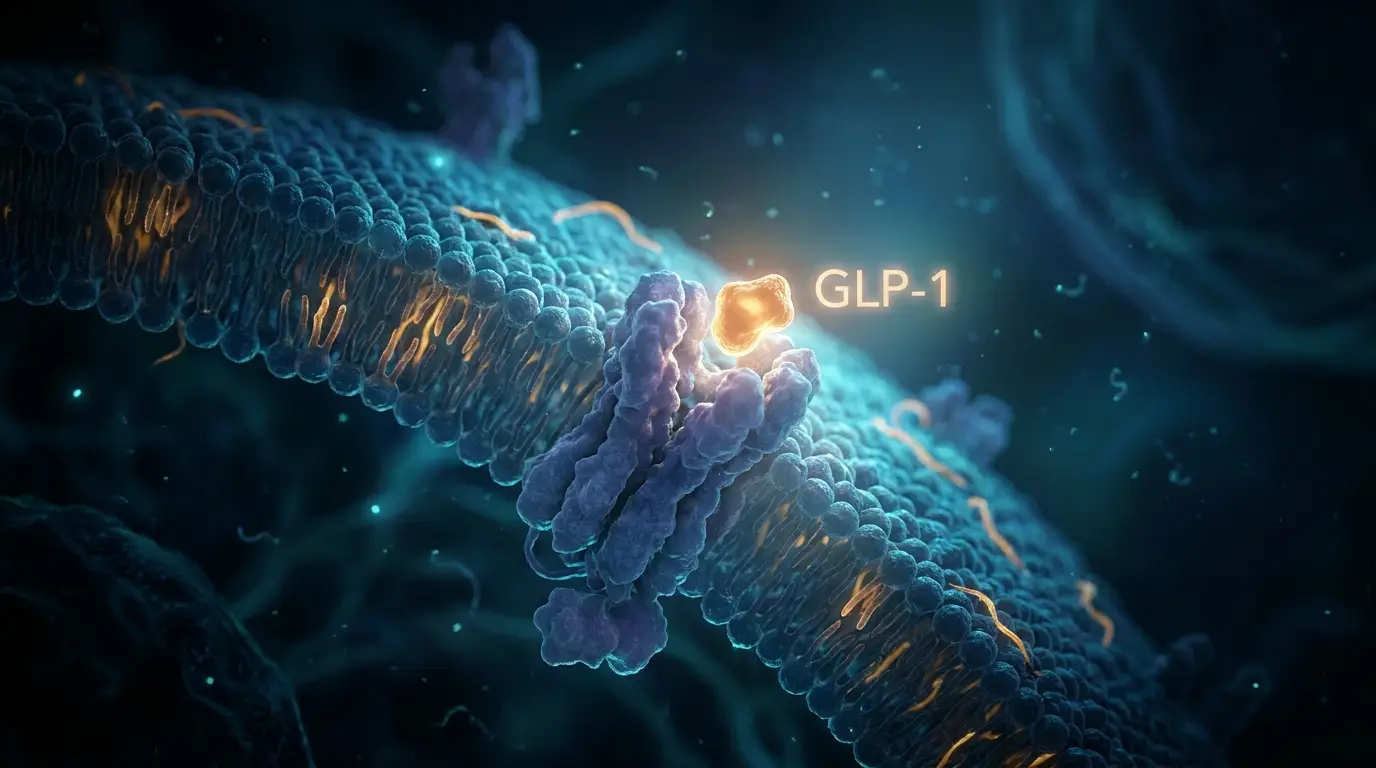

Walk into almost any conversation about injury recovery in a Houston gym, a Clear Lake CrossFit box, or a Woodlands running club, and two names surface within minutes: BPC-157 and TB-500. They are marketed and discussed as near-miraculous healing agents, the peptides that supposedly fix stubborn tendons, speed up post-surgical recovery, and quiet chronic gut and joint problems that conventional care could not. The enthusiasm is genuine, and the anecdotes are everywhere. What is far harder to find is the sober, evidence-graded picture of what the science actually demonstrates versus what it merely suggests. This article is that picture. It walks through the real mechanisms, the strength and the serious limits of the research, the safety and regulatory realities, and the specific Houston context, all framed for education and research discussion rather than as any instruction to obtain or use these compounds.
The honest framing has to come first, because it colors everything else. Neither BPC-157 nor TB-500 is approved by the U.S. Food and Drug Administration for human use. They are research chemicals. That status is not a technicality that enthusiasts have found a clever way around; it reflects the fact that neither has been through the controlled human clinical trials that would establish whether it is safe and effective for treating any condition in people. A handful of peptides are FDA-approved, but only for narrow indications: semaglutide, tirzepatide, and liraglutide for diabetes and weight management, tesamorelin for HIV-associated lipodystrophy, and PT-141 for a specific sexual desire disorder. BPC-157 and TB-500 are not among them. Nothing here is a recommendation to use these substances, and this site does not sell them.
What BPC-157 and TB-500 Actually Are
BPC-157 stands for Body Protection Compound 157. It is a synthetic peptide of fifteen amino acids described as a stable fragment derived from a protein found in human gastric juice. The word derived is important: BPC-157 as sold and studied is a laboratory sequence, not something extracted from the body, and the exact natural parent protein and its relationship to the fragment are matters of ongoing discussion rather than settled fact. Researchers have been interested in it since the 1990s precisely because a molecule associated with the protective lining of the stomach might have broad cytoprotective, or cell-protecting, properties. Most of that interest has played out in laboratory and animal models.
TB-500 is a synthetic version of a fragment of thymosin beta-4, a naturally occurring protein present in nearly all human cells and especially concentrated in platelets and wound fluid. Thymosin beta-4 is a real and heavily studied molecule with a well-characterized role in cell structure and healing. TB-500 is marketed as a related peptide that mimics its regenerative actions. It is worth being precise here, because product labeling often blurs the line: TB-500 and full-length thymosin beta-4 are not identical, and much of the strongest published science actually concerns thymosin beta-4 itself, which has been investigated in genuine human trials for eye and heart conditions. That distinction matters when you try to grade the evidence honestly.
The Proposed Mechanisms, and Why They Are Plausible
Good science begins by taking a hypothesis seriously, and both peptides have mechanistically plausible stories. BPC-157's most cited proposed action is the promotion of angiogenesis, the growth of new blood vessels. Tissue that heals well needs blood supply, and a molecule that encourages vascularization at an injury site could reasonably support repair. Animal studies have also associated BPC-157 with upregulation of growth-factor receptors, modulation of the nitric oxide system, effects on tendon fibroblast growth and migration in cell culture, and protective effects on the gut lining. In rodent models of tendon, muscle, ligament, and gut injury, these effects have translated into faster or more complete healing on various measures. This is a substantial and internally consistent body of preclinical work.
TB-500 and thymosin beta-4 have an equally coherent mechanistic account centered on actin, the protein that forms the internal scaffolding of cells. Thymosin beta-4 binds and regulates actin, which governs how cells migrate. Cell migration is fundamental to wound healing: cells have to move into a damaged area to rebuild it. By promoting actin regulation and cell migration, thymosin beta-4 has been shown in laboratory and animal models to support angiogenesis, reduce inflammation, and encourage the movement of repair cells into injured tissue, including in models of cardiac and corneal injury. TB-500 is presumed to share these actions. The plausibility is real. The gap, as always, is between plausible mechanism in a dish or a mouse and demonstrated benefit in a human being.
Plausible Is Not the Same as Proven
Grading the Evidence: Where the Data Actually Comes From
This is the heart of the matter, and it deserves bluntness. The overwhelming majority of published research on BPC-157 is preclinical: in vitro studies on cultured cells and in vivo studies in rats and mice. Search the scientific literature and you will find dozens of animal papers, many from a relatively concentrated group of research teams, reporting benefits across an unusually wide range of tissues and conditions. That breadth is itself a reason for measured caution. When a single compound is reported to help tendons, ligaments, muscle, bone, brain, gut, blood vessels, and more, the pattern can reflect a genuinely fundamental mechanism, or it can reflect publication and enthusiasm effects that independent replication has not yet fully tested. Robust, large, independently replicated human randomized controlled trials on BPC-157 are, as of this writing, essentially absent.
TB-500 sits in a similar position with an important asterisk. Its parent molecule, thymosin beta-4, has genuinely reached human clinical trials, including studies for dry eye disease, venous stasis ulcers, and cardiac repair after heart attack, some of which have been registered and published. Those are real human data points for thymosin beta-4. But TB-500 as marketed is a fragment or analog, not necessarily the identical molecule used in those trials, and the injury-recovery and athletic-performance uses that drive its popularity have not been validated in controlled human studies. So the honest grade is: strong preclinical science, meaningful but condition-specific human work on the parent protein, and no rigorous human evidence for the muscle, tendon, and joint recovery claims that sell it.
Ask One Question of Any Claim: Human Trial or Animal Study?
It also helps to understand why human trials are so scarce here. Running a proper clinical trial is expensive and requires a sponsor who expects a return, usually through a patentable, approvable drug. Peptides like these occupy an awkward commercial space: hard to patent as novel entities, widely available through the research-chemical and compounding gray market, and therefore poorly positioned to attract the tens of millions of dollars a real trial program costs. The absence of human evidence is thus partly a story about incentives, not only about biology. That does not make the compounds work; it simply explains why the definitive studies people wish existed have not been funded, and why they may not be anytime soon.
Key takeaways
- BPC-157's supportive evidence is almost entirely from cell cultures and rodents; rigorous human trials are essentially absent.
- TB-500's parent molecule, thymosin beta-4, has real human trial data for specific eye and heart conditions, but not for the athletic recovery uses that sell TB-500.
- Proposed mechanisms, angiogenesis and growth-factor effects for BPC-157, actin and cell-migration effects for TB-500, are biologically plausible and well studied in animals.
- Breadth of claimed benefits and reliance on a concentrated set of research groups are reasons for measured skepticism, not enthusiasm.
- The scarcity of human trials reflects commercial incentives as much as biology, and it is unlikely to resolve quickly.
The Safety Picture: What We Know and What We Do Not
Enthusiasts frequently describe both peptides as remarkably well tolerated, and animal studies do generally report favorable short-term safety at the doses tested. But favorable animal safety data and scattered user reports are a weak foundation for human safety conclusions, and the honest position is that the long-term safety of BPC-157 and TB-500 in humans is simply not established. There are no large, controlled human safety databases of the kind that support approved medications. Rare or delayed harms, effects that only appear across years of use, interactions with other conditions or drugs, and consequences of the impurities common in unregulated products are all realistically unknowable from the evidence that exists.
One theoretical concern deserves particular attention precisely because it flows from the proposed mechanism. If BPC-157 and TB-500 promote angiogenesis and cell proliferation, the same properties that might help a tendon heal could, in principle, support the growth and blood supply of a tumor. This is a mechanistic worry, not a demonstrated outcome in people, and it should not be overstated into a claim that these peptides cause cancer, which the evidence does not support. But it is exactly the kind of question that only long-term human studies could answer, and those studies do not exist. For anyone with a personal or family history of cancer, that unresolved question is not trivial, and it belongs in a conversation with a physician.
Unregulated Products Add a Second Layer of Risk
The Regulatory Reality in the United States
The regulatory status of BPC-157 in particular has shifted in ways worth understanding. For a period, some compounding pharmacies prepared BPC-157 for patients. That changed when the FDA evaluated a group of substances nominated for use in compounding and placed BPC-157 in the category of substances that raised significant safety concerns and lacked sufficient information to support compounding, effectively signaling that it should not be compounded for patients. This was a meaningful regulatory statement: not a casual omission, but an affirmative flag that the available data did not meet the bar for even the more flexible compounding pathway. TB-500 has never had an approved human use in this context either.
The practical consequence is that legitimate access to these compounds as prescribed medications is essentially nonexistent, and what circulates instead is the research-chemical market, vials labeled not for human consumption and sold for laboratory use. That labeling is not a wink-and-nod formality; it is the legal and regulatory reality that these are not medicines cleared for people. Understanding this is central to engaging with the topic honestly. It also means that the storage, handling, and dosing discussions that circulate online exist in a space with no professional oversight, no pharmacist to call, and no guarantee of product identity, which is a very different situation from receiving an approved, prescribed medication from a Texas Medical Center pharmacy.
A compelling mechanism explains why a compound might work; only a human trial can tell you whether it does, and for these peptides that trial has not been run.
Dosing References and Why They Are Not Instructions
Because people ask, it is worth acknowledging that the community and research literature contain reference ranges, and equally worth being clear about what those ranges are and are not. In rodent studies, BPC-157 has been administered at microgram-per-kilogram doses, and community protocols often extrapolate to figures cited in the low hundreds of micrograms up to a few hundred micrograms per day, sometimes split across doses. TB-500 protocols frequently describe a loading phase in the low single-digit milligrams per week followed by a lower maintenance figure. These numbers are presented here only as a description of what appears in the literature and in community discussion, not as a recommendation, a prescription, or an instruction to prepare or use anything.
The reason this distinction is not mere legal throat-clearing is that translating an animal dose to a human is genuinely uncertain science, and doing it safely requires accounting for body size, metabolism, delivery route, purpose, interactions, and individual health status. That is the work of a licensed physician who knows a specific person, not a figure copied from a forum. A reference range describes what has been reported; it says nothing about what is appropriate, safe, or effective for any individual. The gap between the two is exactly the gap that professional medical judgment exists to fill, and no article can or should try to close it.
- Reference ranges in the literature describe what has been used in studies or reported by users, not what is proven safe or effective for a person.
- Animal-to-human dose translation is uncertain and depends on factors an article cannot know about any individual.
- Delivery route, product purity, and concentration all affect what a given number actually means in practice.
- Only a licensed physician who knows your history can responsibly weigh any of this for you.
- This site presents no purchasing or sourcing guidance and does not sell peptides.
The Houston and Gulf-Coast Context
Houston shapes this conversation in a few concrete ways. The city is home to the Texas Medical Center, the largest medical complex in the world, which means residents have unusually deep access to genuine sports-medicine, orthopedic, and physical-rehabilitation expertise. For an athlete in Memorial or a weekend warrior in Sugar Land nursing a stubborn tendon, the highest-evidence path to recovery runs through those established, regulated channels, physical therapy, imaging, evidence-based orthopedic care, rather than through an unregulated peptide. The presence of world-class conventional options is itself part of the honest picture: the appeal of these peptides is often frustration with slow recovery, and that frustration is real, but the answer with the best evidence is usually the boring, proven one.
Texas also has a large and active telehealth and compounding market, and Houston sits at its center. Many residents first encounter peptides through telehealth providers, particularly for the FDA-approved GLP-1 medications, and then hear about tissue-repair peptides in the same online spaces. It is worth keeping the categories separate: a legitimately prescribed, FDA-approved medication from a licensed provider is a fundamentally different thing from a research-chemical vial of BPC-157. The regulatory flag against compounding BPC-157 specifically means that reputable Texas compounding pharmacies operating within the rules are not a source for it, which is a signal, not an obstacle to be routed around.
Use the Houston Medical Infrastructure You Already Have
The Gulf-Coast climate adds a smaller, practical footnote for anyone who does encounter these compounds in any legitimate research or prescribed context: the same heat and humidity that make Houston hard on all temperature-sensitive biologics apply here too. Peptides are fragile molecules, more stable as a freeze-dried powder and far more perishable once reconstituted, and the region's summer heat, high humidity, and hurricane-season power outages stress cold-chain storage in ways cooler climates rarely have to plan for. That is a storage reality worth knowing, though it is secondary to the far larger point that the compounds themselves lack human validation.
The Anti-Doping Dimension for Competitive Athletes
For any competitive athlete in the Houston area, from collegiate players to masters-level triathletes bound by sport governing bodies, there is a hard line that often gets lost in the recovery enthusiasm. Thymosin beta-4, the parent molecule behind TB-500, is on the World Anti-Doping Agency prohibited list, banned at all times as a prohibited substance. BPC-157 has likewise drawn regulatory and anti-doping scrutiny. A tested athlete who uses these compounds is risking a doping violation regardless of intent, and the consequences, suspensions, disqualifications, reputational damage, are severe and career-altering. This is not a gray area for anyone subject to testing.
For Tested Athletes, This Is a Sanction Risk, Not Just a Health Question
Putting It Together: An Evidence-Graded Bottom Line
So what does the tissue-repair science really show? It shows two compounds with coherent, biologically plausible mechanisms and a genuinely substantial body of preclinical evidence, mostly in cells and rodents, suggesting they can support healing across a wide range of tissues in those models. It shows, for TB-500's parent molecule, some real human trial work in specific medical conditions unrelated to the athletic uses that drive its popularity. And it shows a near-total absence of the rigorous human randomized controlled trials that would be required to say, with confidence, that either peptide safely and effectively heals injuries in people. That is a story of promise, not proof, and the two should never be conflated.
The safety picture reinforces the caution. Short-term animal data look reasonable, but long-term human safety is unstudied, a theoretical proliferation concern flows directly from the proposed mechanism, and the unregulated market layers on the separate and serious problem of not knowing what is actually in a given vial. Add the FDA's specific flag against compounding BPC-157 and the anti-doping prohibitions relevant to competitive athletes, and the responsible reading is clear: these are research compounds surrounded by real enthusiasm and real uncertainty in roughly equal measure, and the enthusiasm has outrun the evidence.
None of this is a verdict that BPC-157 or TB-500 do nothing; the preclinical science is too consistent to dismiss, and it is entirely possible that future human trials will validate some of the hopes attached to them. But possible is not proven, and an educational resource does no one a service by pretending otherwise. The measured, evidence-graded position is to respect the science that exists, name its limits plainly, and route every real decision to a licensed physician who can weigh a specific person's situation against the genuine unknowns. This article is for adults 18 and older, is educational only, offers no sourcing or purchasing guidance of any kind, and is not a substitute for professional medical care. In a city with the medical resources Houston has, using them well is the most evidence-based recovery strategy of all.
Frequently asked
Are BPC-157 and TB-500 FDA-approved?+
No. Neither is approved by the FDA for human use; both are research chemicals. The FDA specifically evaluated BPC-157 for use in compounding and placed it in a category of substances raising significant safety concerns with insufficient supporting data, effectively signaling it should not be compounded for patients. TB-500 has no approved human use either. A separate small group of peptides is FDA-approved only for specific indications, but these two are not among them.
Is there any human evidence that these peptides heal injuries?+
For the injury-recovery claims that drive their popularity, essentially no rigorous human evidence exists. Almost all supportive data for BPC-157 comes from cell-culture and rodent studies. TB-500's parent molecule, thymosin beta-4, has reached human trials, but for specific conditions like dry eye and cardiac repair, not for the tendon, muscle, and joint recovery uses commonly marketed. Promising animal data is not the same as proven human benefit.
What are the proposed mechanisms of action?+
BPC-157 is proposed to promote angiogenesis, the growth of new blood vessels, along with growth-factor and nitric oxide effects that could support tissue repair. TB-500 and thymosin beta-4 regulate actin, a protein central to cell structure and migration, which supports the movement of repair cells into injured tissue. Both mechanisms are biologically plausible and studied in animals, but plausibility in a model is not demonstrated benefit in people.
Are these peptides safe?+
The honest answer is that long-term human safety is not established. Animal studies report reasonable short-term tolerability, but there are no large controlled human safety databases. A theoretical concern is that mechanisms promoting blood-vessel growth and cell proliferation could, in principle, also support tumor growth, though this is not a demonstrated human outcome. Unregulated products add separate risks of contamination, mislabeling, and incorrect dosing. Anyone considering them should consult a licensed physician.
Can competitive athletes in Houston use TB-500 or BPC-157?+
Athletes in drug-tested sports should treat these as prohibited. Thymosin beta-4, the parent molecule of TB-500, is on the World Anti-Doping Agency prohibited list, banned at all times, and BPC-157 has faced similar anti-doping scrutiny. Using them risks a doping violation with severe consequences regardless of intent. Confirm current status with your sport's governing body and route any recovery question through a physician familiar with anti-doping rules.
Why are there so few human trials if the animal data is strong?+
Partly incentives. Proper human trials cost tens of millions of dollars and typically require a sponsor expecting a return through a patentable, approvable drug. These peptides are hard to patent as novel entities and are widely available through gray-market channels, so they are poorly positioned to attract trial funding. The scarcity of human evidence reflects commercial reality as much as biology, and it is unlikely to change quickly.
What about the dosing numbers I see in online protocols?+
Those are reference ranges describing what has appeared in studies or community discussion, not prescriptions or instructions. Translating an animal dose to a human is genuinely uncertain and depends on body size, metabolism, delivery route, product purity, and individual health, factors a forum figure cannot account for. This site presents such ranges only for education and routes every real dosing decision to a licensed physician who knows the specific person.
How does the Houston climate factor in?+
Peptides are fragile and temperature-sensitive, more stable as a freeze-dried powder and far more perishable once reconstituted. Houston's summer heat, high humidity, and hurricane-season power outages stress cold-chain storage more than cooler climates do. This is a real handling consideration in any legitimate research or prescribed context, though it is secondary to the larger point that these specific compounds lack human validation for the uses people want them for.
Is this article medical advice?+
No. It is educational and for adults 18 and older only. It is not medical advice, not a prescription, and not sourcing or purchasing guidance, and this site does not sell peptides. The science on BPC-157 and TB-500 is largely preclinical, the human evidence for injury recovery is essentially absent, and any real decision belongs with a licensed physician who knows your individual health situation.
References
- Sikiric P et al. — Stable gastric pentadecapeptide BPC 157 (review)Curr Pharm Des 2018;24:1990-2001
- Chang CH et al. — The promoting effect of BPC-157 on tendon fibroblast healingJ Appl Physiol 2011;110:774-780
- Gastric pentadecapeptide BPC 157 and its role in accelerating muscle healing (review)J Physiol Pharmacol 2019
- Goldstein AL et al. — Thymosin β4: a multi-functional regenerative peptideExpert Opin Biol Ther 2012;12:37-51
- Thymosin beta4: structure, function, and biological propertiesAnn N Y Acad Sci 2010;1194:179-189